Living on the Florida waterfront offers beautiful views and easy access to canals, bays, rivers, and the Gulf. However, waterfront property also comes with challenges. Erosion, wave action, storm surge, changing water levels, and aging shoreline structures can gradually damage your property.
A properly designed seawall in Florida can help stabilize the shoreline and protect waterfront property from erosion and water movement.
If you are researching the best seawalls in Florida, you may have questions about materials, installation costs, lifespan, permits, and maintenance. You may also be comparing local marine contractors or searching for companies such as Custom Dock Davit.
This guide explains what Florida property owners should know before building, repairing, or replacing a seawall.
Custom Dock & Davit provides marine construction services for waterfront properties, including seawall construction, seawall repair, dock work, boat lifts, piling replacement, and related waterfront improvements.
What Is a Seawall?
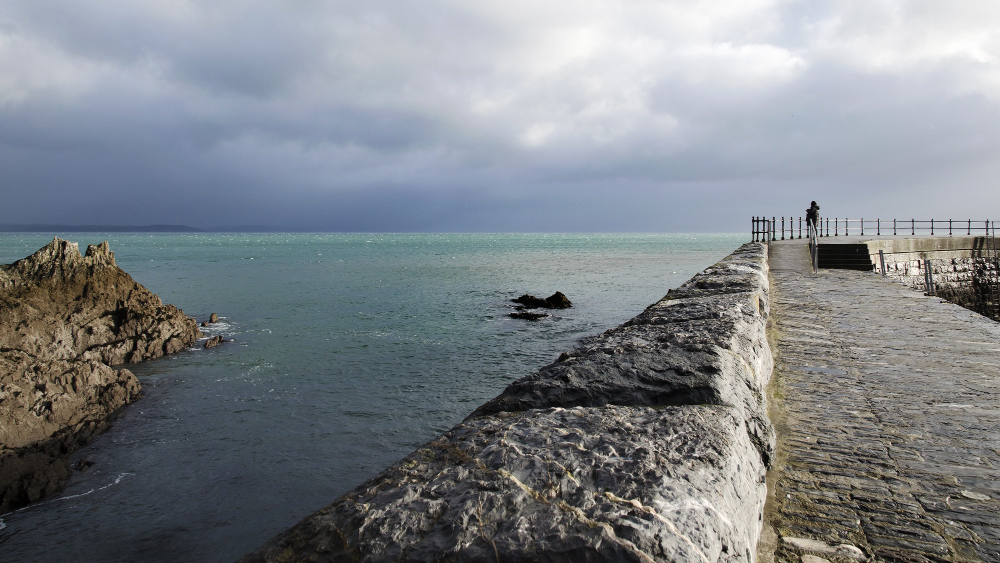
A seawall is a shoreline structure designed to help protect land from erosion and water forces.
Seawalls are commonly installed along:
- Residential waterfront properties
- Canals
- Rivers
- Bays
- Lakes
- Estuaries
- Coastal properties
- Waterfront communities
The structure creates a physical barrier between the shoreline and the water.
However, a seawall is more than a wall placed along the water. Proper design requires consideration of soil conditions, water depth, wave action, wall height, drainage, anchoring, materials, and local regulations.
Florida’s shoreline conditions can vary significantly from one property to another. A seawall that works well at one location may not be appropriate for another.
Why Are Seawalls Important in Florida?
Florida has extensive waterfront property and thousands of miles of shoreline. Coastal and inland waterfront properties can experience erosion and changing water conditions.
Florida DEP describes shorelines as dynamic environments affected by natural erosion, accretion, wave energy, and tidal exchange.
A properly designed seawall can help:
- Reduce shoreline erosion
- Stabilize waterfront property
- Protect landscaping
- Protect structures near the shoreline
- Support waterfront access
- Define the edge of a canal or waterway
- Provide a foundation for certain waterfront improvements
However, seawalls are not a substitute for proper engineering, drainage, maintenance, or permitting.
What Are the Three Main Types of Seawalls?
There are several seawall materials and construction systems available. The three broad categories homeowners often encounter are concrete seawalls, steel seawalls, and vinyl or composite seawalls.
Wood seawalls and natural shoreline stabilization methods are also used in certain situations.
The best option depends on the site.
1. Concrete Seawalls
Concrete seawalls can provide a strong and durable shoreline structure when properly designed and installed.
They may be reinforced with steel and engineered for the conditions at the property.
Concrete can be suitable for properties that require a substantial structural wall. However, installation can involve significant labor, equipment, engineering, and site preparation.
2. Steel Seawalls
Steel sheet piling has been used for many marine construction applications.
Steel can provide substantial structural strength. However, corrosion is an important consideration in a marine environment.
The expected service life of a steel seawall depends on factors such as:
- Water conditions
- Corrosion exposure
- Material thickness
- Protective systems
- Soil conditions
- Maintenance
- Engineering design
3. Vinyl or Composite Seawalls
Vinyl and composite sheet-pile systems are also used for shoreline stabilization.
They can offer resistance to corrosion and may have relatively low maintenance requirements.
Current cost guides place vinyl seawalls at approximately $2XX to $6XX per linear foot, although actual project costs can vary substantially based on wall height, access, soil, water conditions, engineering, and other factors.
What About Wood Seawalls?
Wood seawalls are another option that some waterfront property owners consider.
They may have a lower initial cost than some other materials. However, wood is exposed to moisture, marine organisms, weather, and other environmental conditions.
A wood seawall may therefore require more maintenance and may have a different service life from vinyl, steel, or concrete.
A contractor should evaluate the location before recommending a material.
What Is the Best Seawall Material for Florida?
There is no single seawall material that is best for every Florida property.
The right choice depends on the site.
Important considerations include:
- Saltwater or freshwater exposure
- Wave action
- Water depth
- Soil conditions
- Shoreline shape
- Wall height
- Property use
- Access for construction equipment
- Existing seawall condition
- Required design life
- Budget
- Local permitting requirements
For example, a canal property with relatively calm water may have different requirements from a property exposed to stronger wave action.
This is why a professional site assessment is important before selecting a seawall system.
How Much Does a New Seawall Cost in Florida?
One of the most common questions homeowners ask is:
“How much does a new seawall cost in Florida?”
There is no fixed statewide price.
According to current 2026 cost data, residential seawall installation commonly falls in the range of approximately $1XX to $8XX per linear foot, with complex projects potentially costing significantly more. Angi currently estimates an overall project range of approximately $15,XXX to $6X,XXX, while Home Advisor also reports a typical range of $1XX to $8XX per linear foot.
These are broad national industry estimates, not a quote for a Florida property.
Typical cost ranges by material
| Seawall material | Broad estimated cost per linear foot |
| Wood | $1XX–$5XX |
| Vinyl | $2XX–$6XX |
| Steel | $2XX–$7XX |
| Concrete | $2XX–$8XX |
| Riprap | $7X–$4XX |
These figures come from current national cost guides and can vary significantly from an actual Florida project.
What Makes a Florida Seawall More Expensive?
Several factors can increase the cost of a seawall.
Wall length
A 100-foot seawall requires less material and labor than a 300-foot seawall.
Wall height
Taller seawalls generally require more material and engineering.
Water depth
Deeper water can require longer sheet piles, additional equipment, or specialized installation methods.
Soil conditions
Weak or unstable soils can require additional structural support.
Access
If construction equipment cannot easily reach the shoreline, additional labor or specialized equipment may be necessary.
Material
Vinyl, steel, concrete, wood, and other systems have different material and installation costs.
Existing seawall removal
Replacing an old seawall can require demolition, removal, disposal, and shoreline preparation.
Permits and engineering
Engineering, surveys, environmental reviews, and permits can add to the total project cost.
Dock or boat lift work
If the project includes a dock, boat lift, pilings, or other marine improvements, the overall cost will increase.
How Long Do Seawalls Last in Florida?
Another common question is:
“How long do seawalls last in Florida?”
There is no universal lifespan.
A seawall’s service life depends on:
- Construction material
- Installation quality
- Water chemistry
- Saltwater exposure
- Soil conditions
- Wave action
- Storm exposure
- Drainage
- Maintenance
- Corrosion
- Structural design
Some modern seawall systems can remain functional for several decades when properly designed and maintained.
However, homeowners should not assume that a seawall will automatically last a specific number of years.
Florida’s coastal engineering guidance distinguishes between structural/service life and functional life. Functional life considers how long the structure continues providing its intended level of protection against coastal hazards.
That distinction is important.
A wall may still physically exist while no longer providing the level of protection originally intended.
How Can You Extend the Life of a Seawall?
Regular inspection and maintenance can help identify problems before they become larger structural issues.
Look for:
- Cracks
- Leaning or bowing
- Soil loss
- Sinkholes
- Voids behind the wall
- Exposed anchors
- Corrosion
- Damaged caps
- Separated panels
- Drainage problems
- Erosion at the base
- Water flowing through unexpected areas
If you notice these warning signs, have the seawall inspected.
Early repairs may sometimes be less disruptive than waiting until a major structural failure occurs.
Should You Repair or Replace a Seawall?
The answer depends on the condition of the existing structure.
A repair may make sense when the damage is localized and the underlying structure remains sound.
Replacement may be more appropriate when:
- The wall is severely leaning
- Major sections are failing
- Sheet piles are extensively deteriorated
- Anchors have failed
- Significant soil has been lost
- The wall has reached the end of its useful life
- Repeated repairs are becoming expensive
- Current design requirements call for a different system
Current 2026 cost guidance places seawall repairs broadly around $1XX to $2XX per linear foot, although the actual cost depends on the type and extent of damage.
A professional inspection can help determine whether repair or replacement is more practical.
Do You Need a Permit for a Seawall in Florida?
In many cases, yes, permits or regulatory approvals may be required for seawall construction or modification in Florida.
However, the exact requirements depend on the property’s location, waterbody, shoreline conditions, project design, and applicable jurisdiction.
Florida DEP states that Environmental Resource Permitting regulates many alterations to land surfaces that are not specifically exempt.
Coastal projects can involve additional requirements.
For example, Florida’s Joint Coastal Permit applies to certain activities on natural sandy beaches that extend seaward of the mean high-water line and into sovereign submerged lands.
Properties within the Coastal Construction Control Line (CCCL) may also have additional permitting requirements. Florida DEP states that, unless an exemption applies, a permit is required for construction and excavation activities seaward of the CCCL.
What Permits Are Needed for a Seawall?
There is no single permit that applies to every seawall project in Florida.
Depending on the project, approvals can involve:
- Environmental Resource Permits
- Coastal Construction Control Line permits
- Joint Coastal Permits
- Sovereign submerged lands authorization
- Local permits
- Water management district requirements
- Other state or federal authorizations
Florida DEP explains that ERP permits are processed through DEP district offices, water management districts, and delegated local governments, and that some activities may be exempt.
This is why property owners should check requirements before starting construction.
Can You Build a Seawall Without a Permit?
Do not assume that you can build or replace a seawall without approval.
Permit exemptions are project-specific.
Florida DEP provides an online permitting system and directs property owners to the appropriate district or delegated local government for project-specific requirements.
Starting marine construction before confirming the applicable requirements can create delays, additional costs, or compliance problems.
A professional marine contractor can help you understand the permitting process and coordinate with the appropriate professionals.
Seawalls and Environmental Considerations
A seawall affects the shoreline environment.
Florida DEP notes that shoreline stabilization needs to account for erosion, sediment movement, wave energy, tidal exchange, and environmental conditions.
In some low-energy locations, a living shoreline may be an alternative or complementary approach.
Living shorelines can combine natural features with structural elements to reduce wave energy and erosion. Florida DEP identifies benefits that can include erosion reduction, habitat benefits, and improved shoreline resilience.
The appropriate solution depends on the property.
Seawall vs. Living Shoreline
A traditional seawall is a hard structural barrier.
A living shoreline uses natural or nature-based features such as:
- Native vegetation
- Grasses
- Oyster habitat
- Rock
- Other natural materials
A living shoreline may be appropriate in lower-energy environments, while a structural seawall may be needed where stronger protection is required.
The two approaches can also sometimes be combined.
What Is a Seawall Cap?
The top portion of many seawalls is called the seawall cap.
A properly designed cap can:
- Protect the top of the wall
- Connect structural components
- Provide a finished appearance
- Support certain waterfront improvements
- Help protect reinforcement
The cap material and design depend on the seawall system.
Concrete caps are common in many marine construction applications.
Can a Dock Be Attached to a Seawall?
In many waterfront properties, docks and seawalls work together.
However, the connection must be properly designed.
A dock may involve:
- Pilings
- Stringers
- Decking
- Cleats
- Boat lifts
- Gangways
- Seawall connections
The seawall should not simply be modified without considering the structural impact.
If you are planning both a seawall replacement and a new dock, it can be useful to plan the projects together.
Seawall and Boat Lift Projects
Waterfront owners often need more than a seawall.
A complete marine construction project may include:
- Seawall construction
- Seawall replacement
- Seawall repair
- Dock construction
- Dock repair
- Boat lift installation
- Boat lift replacement
- Piling replacement
- Decking upgrades
- Waterfront renovations
Planning these improvements together can help reduce construction conflicts.
Choosing a Florida Seawall Contractor
Choosing a contractor is an important part of the project.
When comparing seawall contractors, ask:
Does the contractor have marine construction experience?
Waterfront construction is different from standard land-based construction.
Does the contractor understand local permitting?
Permitting requirements can vary by location and project.
Does the contractor provide a written proposal?
The proposal should clearly explain what is included.
What materials will be used?
Ask about the proposed material and why it is suitable for your property.
What is the expected maintenance?
Different seawall systems have different maintenance needs.
How will drainage be handled?
Drainage behind the seawall is important for managing water pressure and soil conditions.
Does the project require engineering?
Some seawall projects require professional engineering or other technical documentation.
Searching for the “Best Seawalls in Florida”
People searching for best seawalls in Florida are often looking for more than a company name.
They may actually want to know:
- Which seawall material is durable?
- How much does a seawall cost?
- How long will it last?
- Which contractor serves their area?
- What permits are required?
- Should they repair or replace?
- What type of seawall is appropriate?
There is no single seawall that is best for every property.
Instead, the appropriate system depends on site-specific conditions.
Why Florida Waterfront Owners Should Not Delay Seawall Repairs
A small seawall problem can sometimes become a larger issue.
For example, a small void behind the wall can allow soil to move toward the water. Over time, that can affect nearby landscaping, patios, decks, or other structures.
Warning signs should be investigated early.
Contact a marine construction professional if you notice:
- Sudden soil loss
- Large cracks
- Wall movement
- Sinkholes
- Significant erosion
- Exposed structural components
- Severe corrosion
- Damaged seawall caps
- Water flowing through the wall
A professional assessment can help determine the cause and possible repair options.
Seawall Maintenance Checklist
A simple maintenance schedule can help waterfront owners monitor their seawall.
Inspect the wall
Look for cracks, movement, corrosion, and damaged sections.
Check the soil behind the wall
Watch for sinkholes, depressions, and areas where soil appears to be disappearing.
Inspect the cap
Look for cracks, separation, and other visible damage.
Check drainage
Poor drainage can increase pressure behind the wall.
Look for erosion
Pay attention to erosion at the waterline and around the ends of the wall.
Schedule professional inspections
A marine construction professional can identify issues that may not be obvious from the surface.
What Should You Ask Before Building a New Seawall?
Before signing a construction contract, ask:
- What type of seawall do you recommend?
- Why is that material appropriate for my property?
- How deep will the structure be installed?
- What engineering is required?
- What permits are required?
- Who handles the permit process?
- How will drainage be managed?
- What is included in the estimate?
- How will the old seawall be removed?
- What maintenance will be required?
- What warranty is provided?
- How will the seawall work with my dock or boat lift?
Clear answers can help you understand the project before construction begins.
Frequently Asked Questions About Seawalls in Florida
How much does a new seawall cost in Florida?
Current 2026 cost guides estimate residential seawall construction at roughly $1XX to $8XX per linear foot, with many projects falling in the $15,XXX to $6X,XXX range. Complex projects can cost substantially more. Actual Florida pricing depends on material, wall length, height, water depth, soil, access, engineering, permits, and other site conditions.
How long do seawalls last in Florida?
There is no universal lifespan. Service life depends on the material, design, installation quality, water conditions, corrosion, storms, soil, and maintenance. A properly designed and maintained seawall can provide protection for decades, but its functional life depends on the level of protection it was designed to provide.
What are the three main types of seawalls?
Three common structural options are concrete, steel, and vinyl/composite seawalls. Wood and riprap are also used for certain shoreline projects.
Do you need a permit for a seawall in Florida?
Often, yes, but requirements vary by location and project. Florida DEP regulates many activities through its Environmental Resource Permitting program, while coastal projects can require additional approvals.
Can I replace my existing seawall without a permit?
Do not assume that replacement is exempt. Some activities may qualify for exemptions, but the applicable rules depend on the project and location. Check with the appropriate Florida DEP district, water management district, delegated local government, or permitting authority before construction.
What is the most durable seawall material?
Durability depends on the site and design. Concrete, steel, vinyl, and other systems can perform well when correctly engineered for the environment. Saltwater, wave action, soil conditions, and corrosion exposure all affect performance.
Is a vinyl seawall good for Florida?
Vinyl seawalls can be suitable for certain Florida properties. They are resistant to corrosion and are used in marine construction. However, the material should be selected based on site conditions rather than material popularity alone.
Is a concrete seawall better than a vinyl seawall?
Not necessarily. Concrete and vinyl have different structural characteristics, costs, installation requirements, and maintenance considerations. The right choice depends on the property and engineering requirements.
Can a seawall protect my property from hurricanes?
A seawall can help manage erosion and water forces, but it does not make a property hurricane-proof. Storm surge, waves, flooding, wind, and other hazards can exceed the design conditions of a seawall.
Should I repair or replace my seawall?
It depends on the condition of the existing structure. Localized damage may be repairable, while extensive structural deterioration may make replacement more practical. A professional inspection can help determine the appropriate approach.
Can a seawall increase property value?
A well-maintained waterfront structure may be an important feature for a waterfront property, but property value depends on many factors. A seawall should primarily be designed to provide appropriate shoreline protection rather than as a guaranteed investment.
Custom Dock & Davit: Seawall and Marine Construction in Florida
For Florida waterfront owners, a seawall is an important structural component of the property.
Custom Dock & Davit provides marine construction services designed for waterfront properties, including seawall construction, seawall repairs, dock projects, boat lift work, piling replacement, decking improvements, and waterfront renovations.
The company serves waterfront properties in Southwest Florida and surrounding areas.
Every property is different. Water conditions, soil, shoreline configuration, existing structures, and local regulations all affect the right solution.
Before starting a seawall project, have the property evaluated and confirm the applicable permitting requirements.
Final Thoughts on the Best Seawalls in Florida
The best seawall in Florida is not necessarily the most expensive material or the system used at another waterfront property.
The right seawall should be selected based on the property’s actual conditions.
Consider:
- Water type
- Wave exposure
- Soil conditions
- Wall height
- Shoreline length
- Property layout
- Material durability
- Drainage
- Engineering
- Permitting
- Maintenance
- Long-term protection goals
Current Florida regulations also make permitting an important part of the planning process. Florida DEP’s permitting programs cover many activities affecting wetlands, surface waters, submerged lands, and coastal areas, while specific coastal locations can have additional requirements.
If your seawall is cracked, leaning, eroding, or approaching the end of its service life, an inspection can help you determine whether repair or replacement is appropriate.
Custom Dock & Davit can help Florida waterfront property owners evaluate seawall and related marine construction needs.