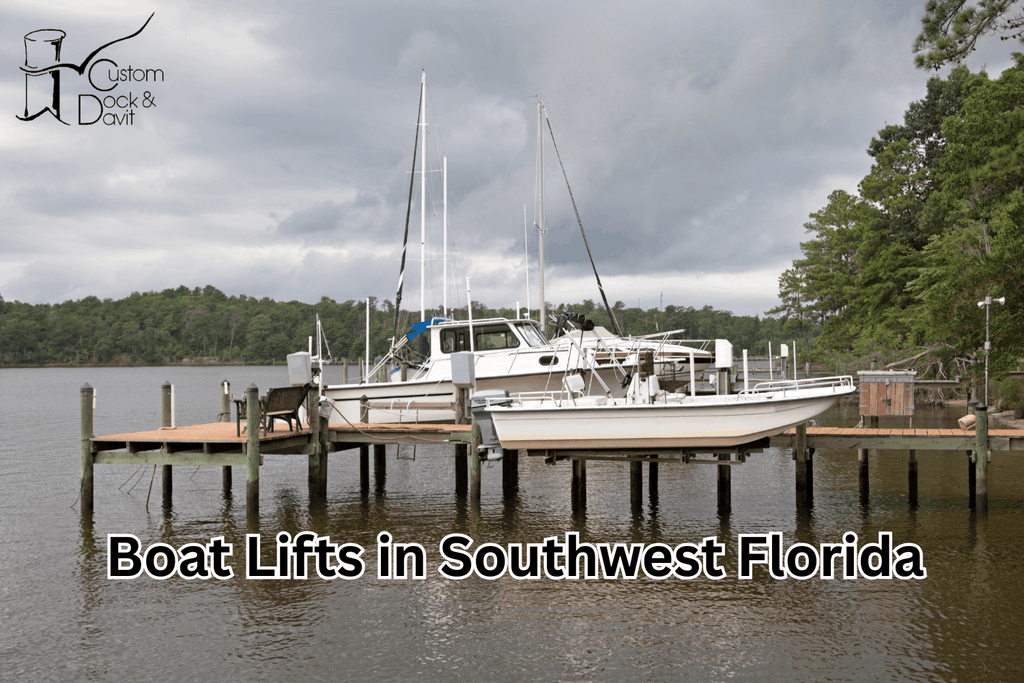
Boat lifts in Southwest Florida help waterfront property owners store and protect their boats when they are not in use. They raise a boat above the water, making it easier to access, maintain, and secure between trips. A properly selected boat lift can also help reduce constant exposure to saltwater, marine growth, and changing water conditions.
However, choosing the right boat lift requires careful planning. Boat size, total weight, water depth, dock configuration, and local environmental conditions all affect the selection and installation process. Regular maintenance is also important because marine environments can place extra stress on lift components.
This guide explains how boat lifts work, which factors matter when choosing one, how to maintain your equipment, and when professional installation or replacement may be necessary.
What Is a Boat Lift?
A boat lift is a mechanical system designed to raise a boat out of the water and support it securely above the surface. It is commonly installed alongside a dock or on a suitable waterfront structure.
Instead of leaving a boat floating in the water whenever it is not being used, owners can raise it onto a supporting cradle. This helps limit prolonged contact with water and reduces exposure to certain forms of marine growth.
Boat lifts are available in different designs to accommodate various boat sizes, hull shapes, and waterfront conditions. The correct system depends on the vessel and the property where the lift will be installed.
A properly selected lift should support the boat evenly, operate smoothly, and fit the available space. It should also be suitable for the water conditions and the intended frequency of use.
Why Are Boat Lifts Important in Southwest Florida?
Southwest Florida offers many opportunities for boating, fishing, and waterfront recreation. However, the local marine environment can be demanding on boats and equipment.
Saltwater exposure, humidity, changing water levels, and marine organisms can affect vessels that remain in the water for extended periods. A boat lift helps reduce some of these challenges by raising the boat when it is not in use.
1. Reduce Constant Water Exposure
Keeping a boat above the water when it is not being used can help reduce prolonged exposure to marine growth and water-related wear. This can make routine cleaning and maintenance easier.
However, a lift does not eliminate every maintenance requirement. Boats still need appropriate cleaning, inspections, and care.
2. Make Boat Access More Convenient
A suitable boat lift can make launching and storing a boat part of a simpler routine. With a properly designed system, owners can raise or lower their vessels using the lift’s operating controls.
Convenient operation is especially useful for people who use their boats regularly. The lift must still be operated according to the manufacturer’s instructions and safety requirements.
3. Support Better Boat Storage
Raising a vessel above the water can help keep the hull away from floating debris and certain water-related hazards. It also provides a more organized storage arrangement along the waterfront.
The level of protection depends on the boat lift’s design, installation, operating limits, and surrounding conditions.
4. Help Protect Your Waterfront Investment
A boat is a significant investment, so proper storage matters. A suitable lift can support an effective boat care routine and help owners manage the challenges of a marine environment.
Nevertheless, a boat lift should not be treated as a guarantee against storms, flooding, or extreme weather. Owners should follow manufacturer guidance and applicable safety recommendations when severe weather is expected.
Types of Boat Lifts to Consider
Different boat lifts are designed for different vessels and waterfront layouts. Understanding the main options can help property owners identify the system that best fits their needs.
1. Four-Post Boat Lifts
Four-post boat lifts use vertical support structures and a lifting mechanism to raise a vessel above the water. They are commonly considered for waterfront installations where the site can accommodate the required support arrangement.
The suitability of this design depends on water depth, bottom conditions, boat dimensions, and the structure’s installation requirements.
Before selecting a four-post lift, confirm that its rated capacity and cradle configuration match the boat being stored.
2. Elevator Boat Lifts
Elevator boat lifts move a vessel along a guided lifting system. Depending on the design, the mechanism may be suitable for waterfront properties where a conventional vertical lift arrangement is not ideal.
The property’s layout, water depth, shoreline conditions, and available installation space all influence whether an elevator system is appropriate.
Professional assessment is important because the lift must move smoothly while supporting the boat securely throughout its operating range.
3. Hydraulic Boat Lifts
Hydraulic boat lifts use hydraulic components to raise and lower a vessel. Their operation depends on the system’s design, rated capacity, and installation configuration.
Like other mechanical systems, hydraulic lifts require regular inspections. Hoses, fittings, cylinders, electrical components, and related parts should be checked according to the manufacturer’s maintenance instructions.
A hydraulic system must be selected for the specific vessel and site rather than based on convenience alone.
4. Personal Watercraft Lifts
Personal watercraft lifts are designed for smaller vessels, such as jet skis. They generally require a different support arrangement from lifts intended for larger boats.
Even when storing a smaller watercraft, it is important to check the lift’s capacity, compatibility, attachment points, and operating instructions.
Choosing a system specifically designed for the intended watercraft helps support safe and convenient storage.
How to Choose the Right Boat Lift
Selecting a boat lift involves more than matching a model to a boat’s length. The entire installation must be suitable for the vessel, the waterfront structure, and the surrounding environment.
1. Check the Boat’s Total Weight
Weight is one of the most important factors when choosing a boat lift. The total supported load may include the vessel, fuel, batteries, equipment, and other items that remain on board during lifting.
Do not rely on the boat’s advertised dry weight alone. Review the manufacturer’s specifications and confirm the appropriate lifting capacity with a qualified professional.
The lift should never be operated beyond its rated limits.
2. Measure the Boat Correctly
Boat length and beam width affect how the vessel fits within the lift’s cradle. Hull shape and support locations also matter because the boat must rest securely and evenly.
Measure the vessel carefully and check the manufacturer’s compatibility requirements before selecting a system.
A lift that is too narrow, too short, or incorrectly configured may create support problems during operation.
3. Evaluate Water Depth and Tidal Changes
Water depth affects how a boat enters and leaves the lift. Water levels may change with tides, weather, and local conditions.
The installation should provide sufficient clearance for the vessel to approach, settle into position, and rise without contacting the bottom or nearby structures.
A professional site assessment can help determine the required operating depth and clearance.
4. Assess the Existing Dock or Waterfront Structure
The condition and design of the existing waterfront structure can influence the installation method. Support points, structural capacity, available space, and access should all be evaluated.
Not every dock or waterfront structure can support every lift configuration. Additional structural work may be necessary in some situations.
A qualified installer can assess the site and identify installation requirements before work begins.
5. Consider Saltwater Exposure
Saltwater can accelerate corrosion in unsuitable or poorly maintained materials. Therefore, components should be appropriate for the marine environment in which they will operate.
Ask about corrosion-resistant materials, protective finishes, compatible hardware, and recommended maintenance procedures.
Regular cleaning and inspection remain important, even when the lift uses materials designed for marine conditions.
6. Think About How Often You Use Your Boat
Your boating habits can influence the type of lift and operating system that makes sense for your property.
For example, frequent boaters may prioritize straightforward operation and convenient access. Owners who use their vessels less often may place greater emphasis on storage arrangements and periodic inspection.
In either case, choose a lift that meets the boat’s requirements and can be maintained according to the manufacturer’s recommendations.
Important Features of a Quality Boat Lift
A well-designed boat lift should provide reliable support and predictable operation. The following features deserve attention during the selection process.
Appropriate Lifting Capacity
The rated capacity must match the vessel and its actual loaded weight. Choosing a lift without enough capacity can create serious safety risks.
Suitable Cradle and Support Configuration
The cradle must support the hull at the appropriate locations. Correct positioning helps distribute the load and reduces the risk of improper support.
Marine-Appropriate Components
Materials and hardware should be suitable for the property’s exposure to saltwater, moisture, and changing weather conditions.
Reliable Operating Controls
The operating system should function as intended and follow the manufacturer’s safety requirements. Controls and electrical components should be protected and maintained appropriately for their environment.
Access for Inspection and Maintenance
A lift should allow the necessary components to be inspected and serviced safely. Routine access can make it easier to identify wear before it becomes a larger problem.
Boat Lift Installation in Southwest Florida
Proper installation is essential for safe operation and long-term performance. Even a suitable lift can develop problems if it is incorrectly positioned, poorly supported, or installed without considering the site’s conditions.
Step 1: Conduct a Site Assessment
The first step is to evaluate the waterfront property. Important details include water depth, bottom conditions, shoreline configuration, existing structures, boat dimensions, and access for installation equipment.
This assessment helps determine which lift designs are suitable for the property.
Step 2: Confirm the Lift Specifications
After assessing the site, the installer should confirm the vessel’s dimensions, total weight, support requirements, and expected operating conditions.
The selected system should meet the manufacturer’s requirements and suit the property’s layout.
Step 3: Review Structural and Installation Requirements
The installer should determine how the lift will be supported and identify any necessary structural considerations. The design must account for the expected load and the conditions at the installation site.
Any required permits or approvals should also be identified before work begins. Requirements can vary according to the property, waterway, proposed work, and applicable regulations.
Step 4: Install the Lift Components
Installation should follow the manufacturer’s instructions and the approved project requirements. Support structures, lifting mechanisms, electrical components, and controls must be installed correctly.
Careful alignment and secure connections help the system operate as intended.
Step 5: Test the System
Before regular use, the completed installation should be inspected and tested according to the manufacturer’s procedures.
The installer should verify that the lift operates correctly, that the boat is supported as intended, and that the owner understands the operating and safety instructions.
Step 6: Establish a Maintenance Routine
Once installation is complete, follow the recommended inspection and maintenance schedule. Keep records of servicing and address unusual noises, uneven movement, corrosion, or other changes promptly.
Boat Lift Maintenance: What Owners Should Know
Regular maintenance is important for boat lifts operating in Southwest Florida’s marine environment. Saltwater, humidity, and frequent use can contribute to wear over time.
A consistent maintenance routine helps owners identify developing problems and keep the equipment in suitable working condition.
Inspect Cables and Lifting Components
If the system uses cables, inspect them according to the manufacturer’s instructions. Look for visible corrosion, fraying, broken strands, kinks, or other signs of deterioration.
Also check accessible lifting components for unusual wear or damage. Do not operate the lift if a critical component appears unsafe.
Cables and other load-bearing parts should be repaired or replaced by qualified personnel when required.
Check Hardware and Connections
Bolts, fasteners, brackets, and other connections should be inspected for looseness, corrosion, or damage.
Marine exposure can affect metal components, so pay attention to areas where moisture and salt may accumulate. Use only compatible replacement parts and follow the manufacturer’s recommendations.
Examine the Motors and Electrical Components
Motors, switches, wiring, and controls should be checked for signs of damage or unreliable operation.
Look for exposed wiring, unusual sounds, inconsistent movement, and other changes. Electrical repairs should be handled by a qualified professional who understands the equipment and its marine environment.
Disconnect or secure the system as directed by the manufacturer before any permitted maintenance work.
Monitor Hydraulic Components
For hydraulic systems, inspect accessible hoses, fittings, and other components according to the manufacturer’s maintenance schedule.
Leaks, damaged hoses, or inconsistent lifting performance require attention. Do not attempt to service pressurized hydraulic components without the proper training and procedures.
Keep the Lift Area Clear
Remove debris that may interfere with the boat’s movement or the lift’s operation. Check that the vessel can approach and leave the lift without contacting nearby structures.
Keeping the area organized also makes routine visual inspections easier.
Follow the Manufacturer’s Service Schedule
Different lift designs have different maintenance needs. Some components may require periodic adjustment, lubrication, replacement, or professional servicing.
Use the manufacturer’s instructions as the primary guide rather than relying on a single maintenance schedule for every type of lift.
Signs Your Boat Lift Needs Professional Attention
A boat lift may continue to operate even when a component is worn or damaged. Therefore, changes in movement, sound, or appearance should not be ignored.
Watch for the following warning signs:
- Uneven lifting: One side rises faster or higher than the other.
- Unusual noises: Grinding, clicking, or other new sounds occur during operation.
- Visible corrosion: Metal components show deterioration beyond normal surface discoloration.
- Cable damage: Cables appear frayed, kinked, or visibly worn.
- Hydraulic leaks: Fluid appears around hoses, fittings, or hydraulic components.
- Electrical problems: Controls respond inconsistently or the motor stops unexpectedly.
- Structural movement: Supports, brackets, or other load-bearing parts appear loose, bent, or damaged.
- Unusual vibration: The lift shakes or moves differently from its normal operation.
If you notice any of these conditions, stop using the lift when it is safe to do so and seek a professional inspection. Never work beneath a suspended boat or attempt repairs on an unsupported lifting system.
Boat Lift Repair or Replacement: Which Is Appropriate?
The right decision depends on the condition of the existing lift, the extent of the damage, and whether the system remains suitable for the vessel.
When Repair May Be Appropriate
Repair may be an option when the problem is limited to a serviceable component and the overall system remains structurally sound.
For example, a qualified technician may be able to address certain motor, control, connection, or replaceable component issues. The technician should also check whether the problem has affected other parts of the system.
A repair should restore safe operation and comply with the manufacturer’s requirements.
When Replacement May Be Necessary
Replacement may deserve consideration when the lift has extensive corrosion, significant structural damage, repeated mechanical failures, or components that can no longer be safely maintained.
A lift may also be unsuitable if the boat has changed and the existing system no longer meets its weight, dimensions, or support requirements.
A professional inspection can help determine whether continued repairs are appropriate or whether a replacement system is the safer option.
Boat Lifts and Severe Weather Preparation
Severe weather can create difficult conditions for waterfront equipment. A boat lift should not be assumed to protect a vessel against every storm, surge, or extreme water level.
Owners should develop a preparation plan that follows the lift manufacturer’s instructions and relevant safety guidance.
Before severe weather, review the recommended procedures for the boat, lift, electrical system, and other equipment. Secure or remove loose items as appropriate, and make sure the lift is maintained and operating correctly.
Do not exceed the system’s operating limits or improvise storm procedures. If the manufacturer provides specific guidance for severe weather, follow it carefully.
After a storm, inspect the lift and surrounding area for visible damage, movement, corrosion, debris, or electrical problems. Have the system evaluated before returning it to service if anything appears unsafe or unusual.
Common Boat Lift Installation Mistakes to Avoid
Avoiding installation mistakes helps support safe operation and reduces the chance of preventable problems.
Choosing a Lift Without Confirming Capacity
Selecting a system based only on boat length can overlook the vessel’s actual loaded weight. Always verify the rated capacity and support requirements.
Ignoring Water Depth
Insufficient water depth or clearance can interfere with boat positioning. The installation should account for expected water-level changes and the vessel’s approach.
Overlooking Structural Conditions
An existing waterfront structure may not be suitable for the intended lift. Have the installation area assessed before choosing a system.
Using Unsuitable Materials
Marine conditions can accelerate deterioration when materials are not appropriate for the environment. Select components designed for the property’s exposure and follow the recommended maintenance procedures.
Skipping Routine Inspections
Even a properly installed lift needs regular attention. Ignoring wear, unusual movement, or corrosion can allow a small problem to become a safety concern.
Attempting Complex Repairs Without Training
Boat lifts support heavy loads and contain mechanical or electrical components. Repairs involving load-bearing parts, hydraulic systems, or electrical equipment should be handled by qualified personnel.
How to Prepare for a Boat Lift Installation
A little preparation can help the installation process run more smoothly.
Before scheduling the work, gather the boat’s make, model, dimensions, and available weight information. Note any additional equipment or items that remain on board during lifting.
Next, identify the available space and review the condition of the existing waterfront structure. Photographs of the installation area can help begin the discussion, although they do not replace a site assessment.
It is also helpful to explain how frequently you use the boat, what type of access you need, and whether you have experienced problems with a previous lift.
Finally, ask the installer to explain the proposed lift configuration, capacity, maintenance needs, safety features, and any applicable permitting requirements. Clear communication helps ensure that the selected system suits both the vessel and the property.
Why Professional Boat Lift Installation Matters
Boat lifts combine structural supports, mechanical components, and sometimes hydraulic or electrical systems. Each part must work correctly with the others.
Professional installation helps ensure that the system is selected for the boat, positioned appropriately, and installed according to the manufacturer’s instructions. It also provides an opportunity to identify site limitations before work begins.
A qualified installer can explain operating procedures, recommended inspections, and the warning signs that require professional attention.
Professional guidance is especially valuable when replacing an existing lift, changing to a different boat, or addressing recurring operating problems.
Frequently Asked Questions About Boat Lifts in Southwest Florida
What size boat lift do I need?
The correct size depends on your boat’s total loaded weight, length, beam width, hull shape, and support requirements. Water depth and the waterfront structure also affect the selection. Confirm the lift’s rated capacity and compatibility before installation.
Can a boat lift be installed on an existing dock?
Possibly, but it depends on the dock’s design, structural condition, available space, and the proposed lift system. An assessment is necessary to determine whether the existing structure can accommodate the installation safely.
Are boat lifts suitable for saltwater?
Boat lifts can be designed for saltwater environments, but material selection and maintenance are important. Choose components appropriate for marine exposure and follow the manufacturer’s recommendations for inspection and care.
How often should a boat lift be inspected?
Follow the manufacturer’s inspection and servicing schedule. Visual checks between uses can also help identify obvious changes, such as unusual movement, corrosion, or damaged components. Arrange professional attention when a problem is suspected.
How long does a boat lift last?
Service life varies according to the lift’s design, materials, installation quality, operating conditions, and maintenance history. Saltwater exposure, heavy use, corrosion, and neglected repairs can affect its condition. Regular inspections help identify wear and deterioration.
Should I repair or replace an older boat lift?
The decision depends on the lift’s structural condition, component availability, repair history, and suitability for the current boat. A professional inspection can help determine whether repairs are appropriate or replacement should be considered.
Do boat lifts require permits?
Some installations or modifications may require permits or other approvals. Requirements depend on the property, waterway, project design, and applicable regulations. Confirm the requirements with the relevant authorities before beginning work.
Can a boat lift protect my boat during a storm?
A boat lift can raise a boat above the normal waterline, but it cannot guarantee protection during severe weather. Follow the manufacturer’s storm-preparation guidance and applicable safety recommendations.
Conclusion
Boat lifts in Southwest Florida provide a practical way to store and access boats along the waterfront. However, choosing the right system requires careful consideration of boat weight, dimensions, water depth, structural conditions, and marine exposure.
Proper installation is equally important. A lift must be correctly selected, securely installed, and operated within its rated limits. Regular maintenance also helps identify corrosion, mechanical wear, electrical issues, and other problems before they create larger safety concerns.
Whether you are considering a new installation, evaluating an existing lift, or planning maintenance, professional guidance can help you make an informed decision. With the right system and a consistent care routine, waterfront property owners can support safer, more convenient boat storage.