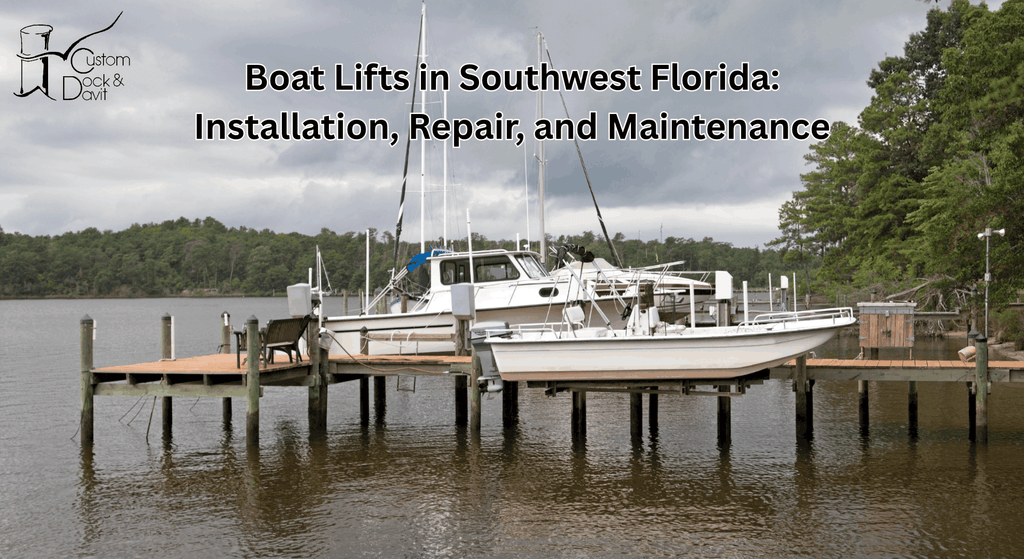
A boat is a valuable investment, and proper storage helps protect it. For waterfront property owners, a boat lift offers a convenient way to keep a boat out of the water when it is not in use. It can also make launching and storing a boat easier.
In Southwest Florida, boat lifts face regular exposure to water, waves, changing water levels, and severe weather. These conditions can affect the lift’s structure and moving parts over time. Therefore, choosing the right system and keeping it in good condition are important.
Whether you are planning a new installation or need to care for an existing system, understanding boat lifts can help you make better decisions.
Custom Dock & Davit provides boat lift services in Southwest Florida, with a focus on proper installation, dependable operation, and long-term care.
What Is a Boat Lift?
A boat lift is a mechanical system that raises a boat out of the water. It usually includes a motor, cables, supports, and a lifting frame.
When the boat is not in use, the lift holds it above the water. This helps reduce constant contact between the hull and the water.
Boat lifts come in different designs and capacities. The right system depends on the boat’s weight, length, width, and shape. Water depth and site conditions also affect the choice.
A properly selected boat lift should support the boat safely and operate smoothly.
Why Are Boat Lifts Important in Southwest Florida?
Boats that stay in the water for long periods may face several problems. Water exposure, marine growth, and changing conditions can affect the hull and other parts of a boat.
A boat lift helps reduce some of these risks by keeping the boat above the water when it is not being used.
Here are some key benefits:
- Less water exposure: Raising the boat reduces the time its hull remains in the water.
- Reduced marine growth: Keeping the hull out of the water can help limit the buildup of marine organisms.
- Convenient storage: A boat lift provides a designated place to keep your boat.
- Easier access: Raising and lowering the boat can make regular use more convenient.
- Better boat care: Keeping the boat out of the water may make it easier to inspect and maintain the hull.
A boat lift does not remove every risk. However, the right system can make boat storage easier and support better care.
Types of Boat Lifts
Boat lifts are available in several designs. Each type has different features and may suit different boats and property conditions.
Choosing the right design is important for safe operation.
1. Four-Post Boat Lifts
A four-post boat lift uses four main support posts to hold the lifting system. Cables and a lifting frame raise and lower the boat.
This design is used for different types of boats. The support structure and capacity must match the boat’s weight and the conditions at the property.
2. Elevator Boat Lifts
An elevator boat lift moves a boat along a guided system. It may be suitable for properties where water depth, shoreline layout, or available space affects the installation.
A site review helps determine whether this type of lift is a good fit.
3. Hydraulic Boat Lifts
Hydraulic boat lifts use hydraulic power to raise and lower a boat. The system is designed to provide lifting support through hydraulic components.
The correct model depends on the boat’s weight, size, and lifting needs. Regular checks of the hydraulic system are also important.
4. Personal Watercraft Lifts
Personal watercraft lifts are designed for smaller watercraft, such as jet skis. They use a lifting system suited to the size and weight of the vehicle.
Always check the system’s rated capacity before choosing one.
How to Choose the Right Boat Lift
Not every boat lift works for every boat or property. Before choosing a system, consider the boat’s specifications and the conditions around the installation area.
Boat Weight and Capacity
The boat’s weight is one of the most important factors. The lift must have enough capacity to raise and hold the boat safely.
Remember to consider fuel, equipment, batteries, and other items that add weight. Choosing a lift based only on the boat’s length can lead to problems.
Boat Length and Width
The boat’s size affects the lifting frame and support setup. The lift should provide suitable support for the boat’s shape and dimensions.
Proper positioning also helps reduce uneven loading.
Water Depth
Water depth affects how the lift can be installed and used. The boat must have enough clearance to move safely between the water and its raised position.
Water depth should be checked at the planned installation area.
Shoreline and Ground Conditions
Soil type, water movement, and the condition of the installation area can affect the support system.
A professional site review helps identify these factors before work begins.
Available Space
The installation area should provide enough room for the boat to enter and leave the lift. It should also allow safe movement during normal operation.
Nearby structures and access points should be considered during planning.
Intended Use
Think about how often you use your boat and how you plan to store it. Your regular boating needs can help determine the most suitable lift design.
Boat Lift Installation: What Should You Expect?
Boat lift installation requires careful planning. The system must match the boat and the conditions of the property.
A poor setup can affect the lift’s stability and performance. For this reason, each stage should be handled with care.
Step 1: Inspect the Installation Site
The first step is to review the planned location. This includes checking water depth, shoreline conditions, available space, and access.
The inspection helps identify possible challenges before installation begins.
Step 2: Review the Boat’s Specifications
The boat’s weight, length, width, and shape should be confirmed. These details help determine the right lift capacity and support arrangement.
It is also important to account for additional weight from fuel and equipment.
Step 3: Select a Suitable Lift
After reviewing the boat and property, the next step is to choose a suitable system.
The lift should match the boat’s specifications and the conditions at the installation site. A professional can help explain the available options.
Step 4: Check Permits and Requirements
Some boat lift installations may require permits or approvals. Requirements depend on the property, the proposed design, and the work involved.
Property owners should check the applicable rules before construction begins.
Step 5: Complete the Installation
Once planning and required approvals are complete, installation can begin.
The support structure, lifting system, and other parts must be installed correctly. Proper alignment is important for smooth operation.
Step 6: Test the System
The completed lift should be tested before regular use. This helps confirm that the system moves as expected and supports the boat correctly.
Any unusual movement or noise should be checked before the lift is used.
Common Signs Your Boat Lift Needs Repair
Boat lifts have moving parts that can wear down over time. Regular use, moisture, and environmental conditions may affect their performance.
Watch for these common warning signs.
1. Slow or Uneven Movement
If the lift moves slowly or raises one side more than the other, there may be a problem with the motor, cables, or lifting parts.
Uneven movement should be inspected before you continue using the system.
2. Damaged or Worn Cables
Cables carry the boat’s weight during lifting. Over time, they may develop rust, fraying, or other visible damage.
Damaged cables can create a serious safety risk. Do not use the lift if a cable appears unsafe.
3. Unusual Sounds
Grinding, clicking, or loud motor sounds may point to a mechanical problem.
Pay attention to new sounds during operation. A professional inspection can help identify the cause.
4. Motor Problems
A motor that struggles to raise the boat or stops working may need attention.
Electrical issues, worn parts, or other faults can affect motor performance. These problems should be checked by a qualified professional.
5. Rust and Corrosion
Metal parts can be affected by regular moisture and water exposure. Rust may appear on supports, fasteners, cables, and other components.
Early inspection helps identify corrosion before it affects the system’s strength.
6. Loose or Damaged Supports
The support structure must remain stable while the boat is being lifted. Loose connections or damaged parts may affect the system’s safety.
Any visible movement or damage should be checked before further use.
Boat Lift Maintenance in Southwest Florida
Regular maintenance helps keep a boat lift in good working condition. It also helps identify worn parts before they cause a larger problem.
Here are some practical maintenance steps.
Inspect the Cables
Look for fraying, rust, broken strands, or other signs of wear. Follow the manufacturer’s guidance for cable inspection and replacement.
Never ignore a damaged cable.
Check the Motor and Controls
Pay attention to how the motor starts and runs. Slow movement, unusual sounds, or repeated stopping may indicate a problem.
Electrical parts should be checked by a qualified professional.
Look for Rust and Corrosion
Check exposed metal parts, supports, fasteners, and other components. Address signs of corrosion before they affect the system.
Keep the Area Clear
Remove objects that may block the lift or interfere with its movement. A clear area supports safer operation.
Watch the Lift During Use
The system should raise and lower the boat smoothly. If you notice uneven movement or unusual sounds, stop using it and arrange an inspection.
Schedule Professional Inspections
Some problems are difficult to spot during a basic visual check. Professional inspections can help assess cables, motors, supports, and other important parts.
The inspection schedule should follow the manufacturer’s guidance and reflect how often the lift is used.
Boat Lift Safety Tips
Boat lifts handle heavy loads, so safe operation is very important. Following basic safety steps can help reduce the risk of damage or injury.
Keep these tips in mind:
- Stay within the lift’s rated capacity.
- Position the boat correctly before lifting.
- Keep people away from moving parts.
- Never stand under a raised boat.
- Watch for unusual sounds or movement.
- Do not use damaged cables or loose supports.
- Follow the manufacturer’s operating instructions.
- Arrange professional repairs when a problem appears.
Never attempt complex repairs while the lift is supporting a boat. Always follow the correct safety procedures.
How Do Weather and Water Conditions Affect Boat Lifts?
Boat lifts in Southwest Florida face regular exposure to water and changing weather. These conditions can affect both the support structure and mechanical parts.
Water Exposure
Moisture can cause rust and corrosion on metal components. Regular checks help identify early signs of wear.
Changing Water Levels
Water levels may rise or fall over time. The lift must be designed and installed to work with the conditions at the property.
Waves and Water Movement
Strong water movement can place pressure on the lift and its supports. These conditions should be considered during installation planning.
Storms and Severe Weather
Severe weather may affect the lift, cables, supports, and other components. After a major storm, check for visible damage before using the system again.
If you notice movement, damaged parts, or unusual operation, arrange a professional inspection.
Boat Lift Repair or Replacement: What Should You Consider?
When a boat lift develops a problem, the first step is to understand the cause and extent of the damage.
Some issues may only require repair or replacement of specific parts. However, major structural damage or an unsuitable system may require a larger solution.
A professional inspection should consider:
- The overall condition of the lift
- The age and condition of the motor
- Cable wear and damage
- The condition of supports and connections
- The lift’s movement and alignment
- The boat’s current weight and size
- The property’s water and site conditions
The right decision should be based on the system’s condition and safety needs.
Common Boat Lift Mistakes to Avoid
Some mistakes can reduce the life of a boat lift or create safety concerns.
Avoid these common problems:
- Choosing a lift without checking the boat’s full weight
- Ignoring water depth and site conditions
- Overloading the system
- Using damaged or worn cables
- Skipping regular inspections
- Ignoring unusual sounds or uneven movement
- Delaying checks after severe weather
- Attempting complex repairs without proper training
Choosing the right system and following a maintenance plan can help prevent many of these issues.
Do You Need a Permit to Install a Boat Lift?
Some boat lift installations may require permits or approvals. The rules depend on the property, the design, and the work involved.
Projects that affect shoreline or aquatic areas may also need additional review.
Before starting an installation, confirm the requirements that apply to your property. A professional marine construction team can help you understand which approvals may be needed.
It is important to check these requirements before work begins rather than assuming that every installation follows the same rules.
Why Professional Boat Lift Services Matter
Boat lifts need proper planning, installation, and maintenance to work safely. Each waterfront property has different conditions, and every boat has its own lifting needs.
A professional team can review these factors and help select a suitable system.
Professional boat lift services can help with:
- Reviewing the installation area
- Checking boat size and weight
- Selecting a suitable lift system
- Planning proper installation
- Inspecting motors and cables
- Checking supports and connections
- Identifying signs of wear or damage
- Recommending repairs or replacement
- Reviewing system operation and safety
Proper installation and regular care help support reliable performance over time.
Choose Custom Dock & Davit for Boat Lifts in Southwest Florida
A boat lift makes boat storage more convenient and helps reduce long-term water exposure. However, choosing the right system is only the first step. Proper installation, regular inspections, and timely repairs are also important.
Custom Dock & Davit provides boat lift services in Southwest Florida. Our team understands the conditions that can affect boat lifts and the importance of choosing a system that fits each property’s needs.
We consider factors such as boat size, weight, water depth, available space, and installation conditions when planning a project. Our focus is on practical solutions, careful workmanship, and dependable results.
If you are planning a new boat lift or need an existing system inspected, contact Custom Dock & Davit to discuss your needs.
Frequently Asked Questions About Boat Lifts in Southwest Florida
What size boat lift do I need?
The right size depends on your boat’s weight, length, width, and shape. You should also account for fuel, equipment, and other items kept on board. A professional can help determine the suitable lift capacity.
How does a boat lift work?
A boat lift uses a motor and lifting system to raise a boat out of the water. Cables and supports hold the boat as it moves into its raised position.
Can one boat lift support different types of boats?
Boat lifts are available for different boat sizes and types. However, each system has a specific design and capacity. The lift must match the boat’s weight and shape.
How often should a boat lift be inspected?
Inspection needs depend on the lift type, how often it is used, and the conditions around the property. Follow the manufacturer’s guidance and arrange professional inspections when needed.
What are the signs that a boat lift needs repair?
Common signs include slow lifting, uneven movement, unusual sounds, damaged cables, motor problems, rust, and loose supports.
Can I use my boat lift after a storm?
Check the system for visible damage before using it. Look at the cables, supports, motor, and other parts. If you notice damage or unusual movement, arrange a professional inspection first.
Do I need a permit to install a boat lift?
Some installations may require permits or approvals. Requirements depend on the property and the proposed work. Check the applicable rules before starting the project.
Can a boat lift help protect my boat?
A boat lift raises the boat above the water when it is not in use. This can reduce water exposure and help limit marine growth on the hull.