A boat is an important investment, and proper storage is essential for protecting it. For waterfront property owners, a boat lift provides a convenient way to keep a vessel above the water when it is not in use. It also makes boat access easier and helps reduce prolonged exposure to water, marine growth, and floating debris.
However, choosing the right boat lift requires careful planning. The equipment must match the boat’s weight, dimensions, and storage requirements. Regular maintenance is equally important to ensure safe and dependable operation.
Custom Dock & Davit provides professional boat lift services in Southwest Florida. With marine construction experience dating back to 1980, the company helps property owners with boat lift installation, replacement, and maintenance.
This guide explains the benefits of boat lifts, different lifting systems, important installation considerations, and practical maintenance tips.
What Is a Boat Lift?
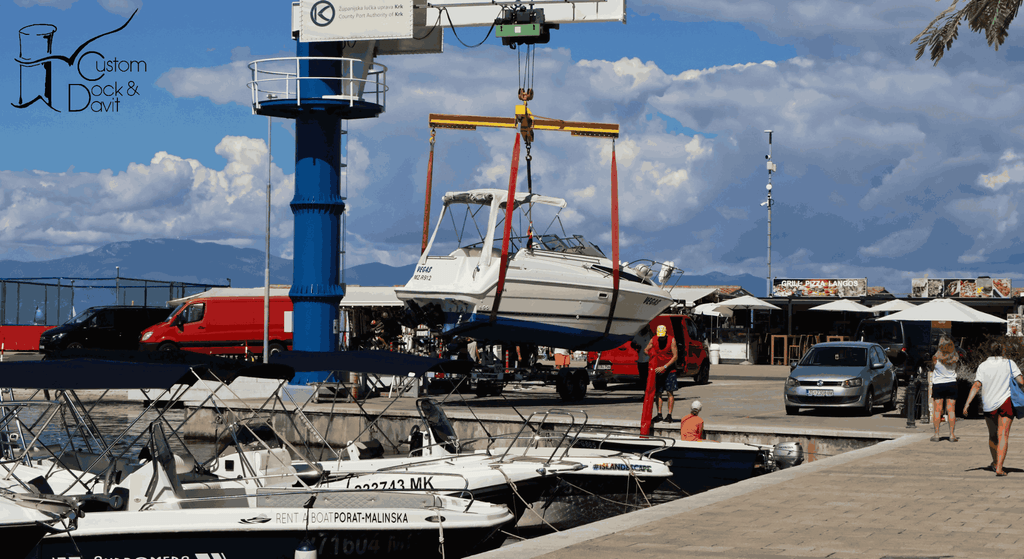
A boat lift is a mechanical system designed to raise a boat above the water and hold it securely when not in use.
Most boat lifts use motors, cables, pulleys, and structural supports to raise and lower vessels. Depending on the equipment, the system may operate through an electric control or another lifting mechanism.
A properly selected boat lift offers several benefits:
- Helps reduce prolonged water exposure.
- Limits marine growth on submerged surfaces.
- Makes boat cleaning and inspection easier.
- Provides convenient boat storage.
- Helps protect the vessel from floating debris.
- Makes launching and retrieving a boat easier.
However, these benefits depend on selecting suitable equipment and maintaining it properly.
Why Are Boat Lifts Important in Southwest Florida?
Boat owners need practical storage solutions that help protect their vessels from everyday environmental conditions. Continuous water exposure, humidity, and marine growth can increase maintenance requirements.
A boat lift helps address some of these challenges by keeping the vessel above the water when it is not being used.
1. Protects the Boat Hull
A boat that remains in the water for extended periods may develop marine growth and surface buildup.
These conditions can make cleaning more difficult and increase maintenance requirements.
A boat lift raises the vessel above the waterline. This makes it easier to inspect the hull and identify potential problems.
2. Reduces Marine Growth
Marine organisms can attach to submerged boat surfaces over time.
Keeping a vessel above the water when it is not in use helps reduce direct exposure to these organisms.
However, regular cleaning and inspection are still necessary to maintain the boat’s condition.
3. Improves Boat Storage
A boat lift provides an organized storage solution for waterfront properties.
Owners can raise their boats after returning from a trip and lower them when they are ready to go out again.
This makes everyday boat storage more convenient.
4. Supports Routine Maintenance
Keeping a boat above the water makes certain maintenance tasks easier.
Owners can inspect visible hull surfaces, check for damage, and identify areas that may need attention.
Early identification can help prevent minor problems from becoming more serious.
Different Types of Boat Lifts
Choosing the right boat lift depends on several factors. These include the vessel’s weight, dimensions, hull design, water depth, and available installation space.
Understanding the available systems can help property owners make better decisions.
1. Electric Boat Lifts
Electric boat lifts use motorized systems to raise and lower vessels.
They provide convenient operation and are suitable for different boat storage requirements.
Before selecting an electric boat lift, consider:
- Motor capacity and lifting requirements.
- Total boat weight.
- Electrical connections.
- Cable condition and arrangement.
- Available installation space.
- Routine maintenance needs.
Proper installation and electrical protection are important for reliable operation.
2. Four-Post Boat Lifts
Four-post boat lifts use four main structural supports to hold and raise a vessel.
These systems provide support across multiple lifting points.
Their suitability depends on the boat’s dimensions, structural requirements, water depth, and available space.
Proper alignment is important because uneven positioning can affect the lifting process.
3. Elevator Boat Lifts
Elevator boat lifts use a guided lifting mechanism to raise and lower vessels vertically.
Their suitability depends on the property’s waterfront layout and installation requirements.
Before selecting this type of system, property owners should consider water depth, structural support, boat dimensions, and available clearance.
4. Personal Watercraft Lifts
Personal watercraft lifts are designed for smaller vessels, such as jet skis.
They provide a convenient way to store personal watercraft above the water when not in use.
Although these systems are smaller than traditional boat lifts, proper installation and regular maintenance remain important.
Important Factors to Consider Before Boat Lift Installation
Installing a boat lift requires more than selecting equipment. The lifting system must match the boat and the property’s conditions.
Careful planning helps support safe operation and long-term performance.
1. Boat Weight and Dimensions
Boat weight is one of the most important factors when choosing a lifting system.
Consider the vessel’s total loaded weight rather than its dry weight alone.
Important details include:
- Boat length and width.
- Hull design.
- Engine weight.
- Fuel and onboard equipment.
- Additional accessories.
- Maximum expected load.
The selected boat lift must have sufficient capacity for the vessel’s actual operating weight.
2. Water Depth and Water Levels
Water depth affects how a boat enters and leaves the lifting system.
The installation must provide enough clearance for the vessel to move safely.
Water levels can also change because of environmental conditions. These variations should be considered during installation planning.
3. Structural Support
A boat lift requires a stable supporting structure.
Before installation, the surrounding dock and support components should be evaluated.
Important considerations include:
- Structural condition.
- Mounting points.
- Alignment.
- Support placement.
- Overall load requirements.
A professional assessment helps identify potential structural concerns before installation begins.
4. Electrical Requirements
Motorized boat lifts require suitable electrical connections.
The electrical system should support the equipment safely and reliably.
Consider motor placement, wiring protection, control systems, and protection against moisture.
Electrical installation and repairs should be handled by qualified professionals.
5. Available Installation Space
The available waterfront space influences the type and configuration of a boat lift.
The system should provide enough clearance for the boat to enter, exit, and move without obstruction.
Proper positioning also helps prevent unnecessary contact with surrounding structures.
6. Permits and Installation Requirements
Boat lift installation may require permits and regulatory approvals.
Requirements depend on the property’s conditions and the proposed installation.
Property owners should review applicable regulations before beginning work. Professional guidance can help identify the necessary documentation and installation considerations.
Boat Lift Maintenance: How to Keep Your Equipment in Good Condition
Regular maintenance is essential for dependable boat lift operation.
The system includes several mechanical and structural components. Each requires attention to help prevent unexpected problems.
Here are some practical maintenance recommendations.
1. Inspect the Lifting Cables
Cables carry the boat’s weight during lifting and lowering.
Over time, they may experience wear, corrosion, or physical damage.
Check visible cable sections for:
- Fraying.
- Broken strands.
- Rust or corrosion.
- Unusual stretching.
- Improper positioning.
Damaged cables should be evaluated by a qualified professional before the lift is operated again.
2. Check the Motor
The motor powers the lifting mechanism.
Unusual sounds, slow movement, or inconsistent operation may indicate a problem.
Pay attention to how the motor performs during normal operation. If you notice unusual behavior, arrange a professional inspection.
3. Examine Pulleys and Moving Components
Pulleys guide the cables during the lifting process.
Worn or damaged pulleys may affect the system’s movement and alignment.
Follow the manufacturer’s recommendations for lubrication, cleaning, and component inspections.
4. Look for Corrosion
Boat lift components are regularly exposed to moisture and environmental conditions.
Inspect visible metal parts, fasteners, and structural supports for signs of corrosion.
Early attention can help prevent further deterioration.
5. Keep the Lift Area Clear
Debris and other obstructions can interfere with boat lift operation.
Keep the surrounding area clean and ensure the vessel has enough clearance to move safely.
Also, check for objects that could become trapped in moving components.
6. Schedule Professional Inspections
Some mechanical problems are difficult to identify through visual inspections alone.
Professional inspections help evaluate cables, motors, pulleys, structural supports, and electrical components.
Follow the equipment manufacturer’s maintenance schedule. Arrange an additional inspection whenever you notice unusual operation.
Common Signs Your Boat Lift Needs Professional Attention
Boat lifts experience repeated mechanical movement and weight loads. Over time, certain components may wear down.
Recognizing warning signs early can help prevent further damage.
Uneven Lifting
A properly functioning boat lift should raise and lower a vessel in a balanced manner.
If one side moves differently from the other, there may be a problem with the cables, pulleys, or alignment.
Uneven movement can place additional stress on the equipment.
Stop using the system if you suspect a safety issue and arrange a professional evaluation.
Unusual Operating Noises
Grinding, squeaking, or clicking sounds may indicate mechanical wear or misalignment.
These sounds should not be ignored.
A professional inspection can help identify the cause and determine whether any components require attention.
Damaged or Loose Cables
Cables are essential to the lifting system.
Visible fraying, corrosion, broken strands, or unusual slack may indicate a serious problem.
Avoid operating the lift until damaged components have been professionally evaluated.
Motor Problems
A motor that struggles to raise or lower a boat may have electrical or mechanical issues.
Slow operation, inconsistent movement, and overheating are warning signs that require attention.
Visible Structural Damage
Cracks, corrosion, loose connections, and movement in supporting components can affect the stability of the lifting system.
These problems should be inspected before continued operation.
When Should You Consider Boat Lift Replacement?
Regular maintenance can help extend the useful life of a boat lift. However, some systems eventually require replacement.
An older lift may no longer provide the support or performance needed for the vessel.
Consider a professional evaluation if:
- The lifting system experiences repeated failures.
- Major structural components show significant deterioration.
- The equipment cannot safely support your current boat.
- Mechanical problems continue after repairs.
- Essential components are severely damaged.
- The existing system no longer meets your storage requirements.
A professional assessment can help determine whether repairing the existing lift or installing a replacement system is more appropriate.
How to Choose the Right Boat Lift
Selecting a boat lift requires careful consideration of your vessel and waterfront property.
The right equipment should provide suitable lifting capacity, reliable operation, and convenient access.
Keep these factors in mind when evaluating your options.
Understand your boat’s specifications: Check the total loaded weight, dimensions, and hull design.
Evaluate lifting capacity: Make sure the equipment meets the manufacturer’s recommended lifting requirements.
Review the installation area: Consider water depth, available space, structural support, and boat clearance.
Consider equipment quality: Examine the materials, construction, motor, cables, and other important components.
Understand maintenance requirements: Review the recommended inspection and servicing schedule.
Plan for future needs: Consider whether changes in your boating requirements may affect the equipment you select.
Careful planning can help you choose a system that supports convenient and dependable boat storage.
Why Choose Custom Dock & Davit for Boat Lift Services?
Selecting an experienced marine construction company is an important part of any boat lift project.
Custom Dock & Davit has been serving property owners since 1980. The company understands the importance of proper planning, equipment selection, and installation.
Custom Dock & Davit provides assistance with different boat lift requirements, including:
- Boat Lift Installation: Planning and installing a lifting system based on the boat and property requirements.
- Boat Lift Replacement: Evaluating existing equipment and helping determine suitable replacement options.
- Boat Lift Maintenance: Inspecting important components to support reliable equipment operation.
- Boat Lift Repairs: Addressing mechanical and operational concerns that affect lifting performance.
Every boat lift project has different requirements. The boat’s specifications, installation conditions, and equipment configuration should all be considered before work begins.
Custom Dock & Davit focuses on providing practical solutions that support convenient boat storage and dependable waterfront use.
Frequently Asked Questions About Boat Lift Services
1. What is the main purpose of a boat lift?
The main purpose of a boat lift is to raise a vessel above the water when it is not being used.
This helps reduce prolonged water exposure, limit marine growth, and make routine boat maintenance easier.
2. How do I know which boat lift is right for my boat?
The correct boat lift depends on your vessel’s weight, length, width, and hull design.
Water depth, installation space, and structural requirements also influence equipment selection.
A professional assessment can help identify a suitable system.
3. How often should a boat lift be maintained?
Boat lift maintenance should follow the manufacturer’s recommendations.
However, owners should regularly observe the system and look for damaged cables, unusual noises, corrosion, and inconsistent movement.
Professional inspections can help identify problems that are not immediately visible.
4. Can a boat lift reduce marine growth?
Yes. Keeping a boat above the water when it is not in use helps reduce direct exposure to marine organisms.
However, it does not eliminate the need for regular hull cleaning and maintenance.
5. What causes a boat lift to operate unevenly?
Uneven lifting may result from cable problems, pulley damage, mechanical wear, or incorrect alignment.
The system should be inspected before further operation because uneven movement can create additional stress.
6. When should boat lift cables be replaced?
Cable replacement depends on the manufacturer’s recommendations and the cable’s condition.
Fraying, broken strands, corrosion, and visible damage are warning signs that require professional attention.
7. Can an existing boat lift be replaced?
Yes. An existing boat lift can be replaced when it is severely damaged, outdated, or no longer suitable for the vessel.
A professional evaluation helps determine the appropriate replacement requirements.
8. Why is professional boat lift installation important?
Professional installation helps ensure the lifting system is properly positioned and configured.
It also addresses important structural, mechanical, and electrical requirements that affect safe operation.
Contact Custom Dock & Davit for Professional Boat Lift Services
A boat lift is an important part of a functional waterfront property. It provides convenient boat storage, helps reduce prolonged water exposure, and makes routine maintenance easier.
However, the equipment must be suitable for the vessel and installed correctly. Regular inspections and timely maintenance are also essential for dependable performance.
Custom Dock & Davit provides professional boat lift services in Southwest Florida, including installation, replacement, and maintenance.
With marine construction experience dating back to 1980, the company is committed to helping property owners find practical solutions for their boat storage needs.