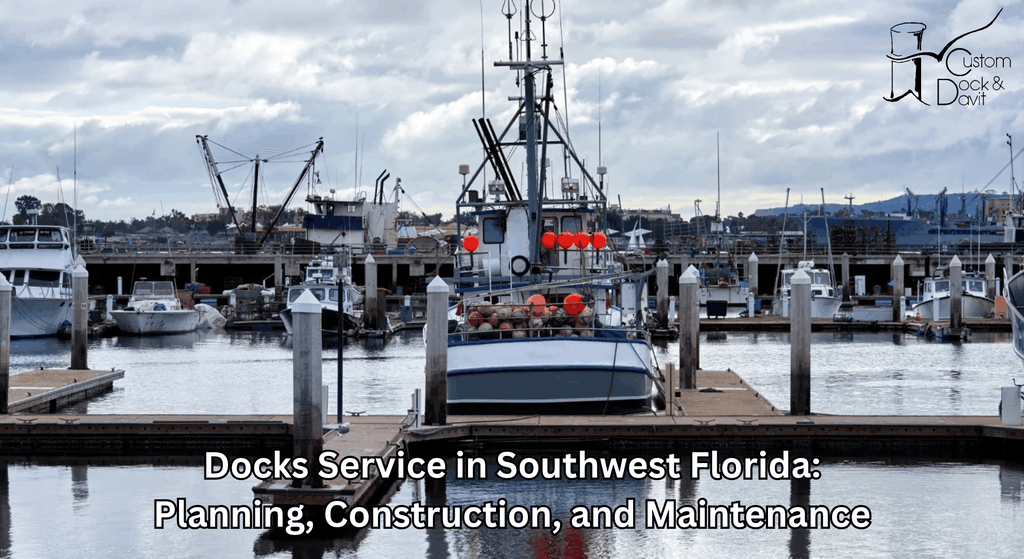
A well-designed dock is an important part of a waterfront property. It provides convenient access to the water, supports everyday waterfront activities, and can improve the property’s overall functionality. However, docks are constantly exposed to water, moisture, wave activity, sunlight, and changing weather conditions. Proper planning, construction, and maintenance are essential to keeping a dock safe, stable, and functional.
Custom Dock & Davit provides professional docks service in Southwest Florida, with a focus on quality workmanship and solutions designed around individual waterfront properties. Every property has different requirements, so understanding the shoreline, water conditions, and intended use is an important part of the construction process.
This guide explains dock construction, design considerations, materials, maintenance, and common issues property owners should understand before starting a project.
What Are Dock Services?
Dock services involve the planning, construction, and care of waterfront dock structures. These structures provide a stable connection between the property and the water.
A dock should be designed to meet the property’s needs while accounting for the surrounding environment. Its layout, materials, supports, and connections all play a role in long-term performance.
Professional dock services focus on several important areas:
- Evaluating the waterfront property
- Planning an appropriate dock design
- Selecting suitable construction materials
- Understanding structural requirements
- Considering water depth and shoreline conditions
- Following applicable construction requirements
- Maintaining the dock’s condition over time
A properly planned dock can provide convenient waterfront access while supporting safe and practical use.
Why Proper Dock Construction Matters
Dock construction requires more than placing a platform over the water. The structure must be designed to handle environmental exposure and regular use.
Water movement, changing water levels, and weather conditions can place stress on dock components. Poor planning or unsuitable materials may lead to premature deterioration and structural concerns.
Proper construction helps address these challenges from the beginning.
A well-built dock should provide:
- Stable walking surfaces
- Secure structural connections
- Suitable support beneath the structure
- Materials appropriate for waterfront exposure
- A practical layout for everyday use
- Long-term durability
Professional planning also helps identify potential site challenges before construction begins.
How to Plan a Dock for Your Waterfront Property
Every waterfront property is different. Therefore, dock planning should begin with an evaluation of the specific site.
Several factors influence the design and construction process.
1. Evaluate the Shoreline
The shoreline affects how a dock connects to the property. Its shape, condition, and surrounding ground should be considered before selecting a design.
A proper evaluation helps identify possible limitations and determine how the structure can fit into the available space.
2. Understand Water Depth
Water depth is an important factor in dock design. It can influence the structure’s layout, support requirements, and access to the water.
Understanding water conditions before construction helps create a design that suits the property.
3. Determine the Intended Use
Think about how you plan to use the dock. Some property owners need a simple structure for waterfront access, while others may require a larger layout for regular boating activities.
The intended use helps determine the dock’s dimensions, configuration, and overall design.
4. Select Suitable Materials
Dock materials should withstand repeated exposure to water, moisture, sunlight, and everyday use.
Choosing appropriate materials can support durability and reduce unnecessary maintenance concerns.
5. Review Construction Requirements
Before beginning construction, property owners should understand which permits, approvals, and other requirements apply.
Planning these details early can help prevent unnecessary delays and changes during the project.
Choosing the Right Dock Design
The right dock design depends on the property’s layout, water conditions, and intended use.
A dock should provide convenient access while making effective use of the available waterfront space. Its configuration should also account for structural support and environmental exposure.
Some important design considerations include:
Size and layout: The dock should provide enough usable space without exceeding applicable site restrictions.
Water access: The design should support convenient movement between the property and the water.
Structural support: Supports and connections must be suitable for the expected conditions and intended use.
Safety: Walking surfaces, access points, and other structural elements should be considered during planning.
Future needs: Property owners should think about how their dock may be used in the future.
A custom design helps address these factors based on the specific property rather than relying on a standard layout.
How Environmental Conditions Affect Docks
Docks remain exposed to the surrounding environment throughout their service life. These conditions can gradually affect materials and structural components.
Water Exposure
Continuous moisture can affect certain materials and connections. Material selection and proper installation are important for reducing deterioration.
Wave Activity
Repeated wave movement can place stress on the dock and its support structure. The design should account for the expected water conditions.
Changing Water Levels
Water levels can change due to environmental conditions. These changes may affect how a dock interacts with the surrounding water.
Sunlight and Weather
Direct sunlight, moisture, wind, and storms can contribute to material wear. Regular inspections help identify visible deterioration.
Soil and Ground Conditions
The ground beneath and around the structure can influence support and stability. These conditions should be evaluated during the planning process.
Understanding these factors helps property owners make better decisions about dock construction and maintenance.
What Materials Are Used for Dock Construction?
Material selection is one of the most important parts of building a durable dock. The appropriate materials depend on the property’s conditions, the design, and how the structure will be used.
Common material considerations include:
Wood
Wood is a traditional choice for dock construction. It can provide a natural appearance and a familiar waterfront design.
However, the type of wood, treatment, installation, and maintenance all influence its performance.
Composite Materials
Composite materials are another option for certain dock applications. They can offer different maintenance and appearance characteristics compared with traditional wood.
Their suitability depends on the project’s structural and environmental requirements.
Concrete
Concrete may be considered for specific structural applications. Its use depends on the design, site conditions, and engineering requirements.
Regardless of the material selected, proper installation is essential. A suitable material cannot provide reliable performance if the structure is poorly designed or constructed.
Signs Your Dock Needs Professional Attention
Regular inspections can help property owners identify problems before they become more serious.
Some common warning signs include:
Loose or Damaged Decking
Loose boards, cracks, splinters, and uneven surfaces can affect the safety and usability of a dock.
Damaged sections should be evaluated to determine whether corrective work is needed.
Structural Movement
A dock that shifts, leans, or moves unexpectedly may have an underlying structural issue.
Movement should not be ignored because it can affect the stability of the structure.
Deteriorating Supports
Support components play an important role in holding the dock in place. Visible damage or deterioration may indicate that the structure needs professional evaluation.
Loose Connections
Bolts, fasteners, brackets, and other connections can experience wear over time.
Regularly checking visible connections can help identify potential concerns.
Uneven Walking Surfaces
Changes in the level of the dock can create tripping hazards. Uneven sections may also indicate movement or deterioration beneath the surface.
Visible Material Damage
Water and weather exposure can gradually affect construction materials. Cracking, corrosion, rot, and other visible changes should be assessed.
Early evaluation can help determine the cause of these problems and the appropriate next steps.
Dock Maintenance in Southwest Florida
Regular maintenance is essential for keeping a dock in suitable working condition.
Because docks remain exposed to environmental conditions throughout the year, property owners should pay attention to changes in the structure.
Here are some useful maintenance practices.
Inspect Decking Regularly
Check for loose boards, cracks, splinters, and uneven areas. Addressing visible damage can help reduce potential safety concerns.
Check Structural Components
Look at visible supports, connections, and other structural elements. Signs of movement or deterioration should be evaluated.
Keep the Dock Clean
Remove leaves, debris, and other materials that collect on the walking surface. A clean dock is easier to inspect and use.
Monitor Changes After Severe Weather
Strong winds, waves, and storms can affect dock structures. Inspect the dock after severe weather and look for new damage or movement.
Arrange Professional Inspections
Some structural problems may not be visible during a basic inspection. Professional evaluation can help identify concerns that require further attention.
Consistent maintenance supports the dock’s condition and helps property owners identify problems early.
Common Dock Construction Problems to Avoid
Careful planning can prevent many problems during and after construction.
Ignoring Site Conditions
A design that does not account for water depth, shoreline characteristics, and ground conditions may not perform as intended.
Selecting Unsuitable Materials
Materials should be appropriate for the level of moisture, sunlight, and environmental exposure they will experience.
Overlooking Permits
Beginning construction without checking applicable requirements can create compliance problems and delays.
Poor Structural Planning
Supports, connections, and other structural elements must be considered carefully. Weak planning can affect the stability and performance of the finished dock.
Neglecting Maintenance
Even a well-constructed dock requires regular attention. Ignoring early warning signs can allow minor issues to become more serious.
Avoiding these mistakes helps create a more reliable construction process.
Do You Need a Permit to Build a Dock?
Dock construction may require permits, approvals, or other authorizations depending on the property’s conditions and the proposed design.
Requirements can vary based on factors such as:
- Dock size and configuration
- Property and shoreline conditions
- Environmental considerations
- Construction methods
- Applicable local and state regulations
Some qualifying projects may meet specific exemption requirements. However, property owners should not assume that an exemption applies without confirming the rules.
Before construction begins, review the applicable requirements and obtain the necessary approvals. Proper planning can help prevent delays and ensure that the proposed dock follows relevant regulations.
How to Extend the Life of Your Dock
A dock is exposed to environmental conditions every day. Although normal wear cannot always be avoided, proper care can help maintain its condition.
Consider these practices:
- Inspect the dock regularly.
- Address loose or damaged decking.
- Monitor structural supports and connections.
- Clean the walking surface.
- Watch for signs of corrosion or material deterioration.
- Check for damage after severe weather.
- Seek professional advice when structural changes appear.
The most important step is to avoid ignoring visible problems. Early attention can help property owners understand what is happening and decide how to address it.
Why Professional Dock Services Matter
Dock construction requires knowledge of waterfront conditions, materials, structural requirements, and proper installation methods.
Professional experience helps ensure that these factors are considered throughout the project.
An experienced marine construction team can evaluate the property, identify potential challenges, and help determine an appropriate design.
Professional guidance is also valuable when property owners need to understand construction requirements or evaluate an existing dock.
Choosing a qualified professional helps support better planning, careful workmanship, and a structure designed for its intended use.
Choosing Custom Dock & Davit for Docks Service in Southwest Florida
Custom Dock & Davit understands the importance of durable dock construction and careful project planning. With decades of marine construction experience, the company focuses on solutions suited to the individual conditions of each waterfront property.
Every dock project requires attention to shoreline characteristics, water conditions, structural requirements, and intended use.
Custom Dock & Davit takes these factors into consideration when planning dock construction. The goal is to provide practical solutions supported by quality workmanship and an understanding of the waterfront environment.
If you are planning a new dock or have concerns about an existing structure, professional evaluation can help you understand the appropriate next steps.
Frequently Asked Questions About Docks Service
What does dock service include?
Dock services can include site evaluation, design planning, material selection, construction, and maintenance. The exact work depends on the property’s needs and the condition of the existing structure.
How do I choose the right dock design?
Consider the property’s shoreline, water depth, available space, intended use, and applicable requirements. A professional evaluation can help determine the most suitable design.
How often should a dock be inspected?
A dock should be checked regularly and after severe weather. Professional inspections are also useful when you notice structural movement, loose decking, or visible deterioration.
What is the most important factor in dock construction?
Proper planning is one of the most important factors. The design should account for water conditions, shoreline characteristics, structural support, materials, and intended use.
Can an existing dock be maintained?
Yes. Regular inspections and appropriate maintenance can help preserve an existing dock. The right approach depends on its materials, structural condition, and level of deterioration.
Why is professional dock construction important?
Professional construction helps ensure that the design, materials, structural components, and installation methods are suitable for the property’s waterfront conditions.A well-designed dock is an important part of a waterfront property. It provides convenient access to the water, supports everyday waterfront activities, and can improve the property’s overall functionality. However, docks are constantly exposed to water, moisture, wave activity, sunlight, and changing weather conditions. Proper planning, construction, and maintenance are essential to keeping a dock safe, stable, and functional.
Custom Dock & Davit provides professional docks service in Southwest Florida, with a focus on quality workmanship and solutions designed around individual waterfront properties. Every property has different requirements, so understanding the shoreline, water conditions, and intended use is an important part of the construction process.
This guide explains dock construction, design considerations, materials, maintenance, and common issues property owners should understand before starting a project.
What Are Dock Services?
Dock services involve the planning, construction, and care of waterfront dock structures. These structures provide a stable connection between the property and the water.
A dock should be designed to meet the property’s needs while accounting for the surrounding environment. Its layout, materials, supports, and connections all play a role in long-term performance.
Professional dock services focus on several important areas:
- Evaluating the waterfront property
- Planning an appropriate dock design
- Selecting suitable construction materials
- Understanding structural requirements
- Considering water depth and shoreline conditions
- Following applicable construction requirements
- Maintaining the dock’s condition over time
A properly planned dock can provide convenient waterfront access while supporting safe and practical use.
Why Proper Dock Construction Matters
Dock construction requires more than placing a platform over the water. The structure must be designed to handle environmental exposure and regular use.
Water movement, changing water levels, and weather conditions can place stress on dock components. Poor planning or unsuitable materials may lead to premature deterioration and structural concerns.
Proper construction helps address these challenges from the beginning.
A well-built dock should provide:
- Stable walking surfaces
- Secure structural connections
- Suitable support beneath the structure
- Materials appropriate for waterfront exposure
- A practical layout for everyday use
- Long-term durability
Professional planning also helps identify potential site challenges before construction begins.
How to Plan a Dock for Your Waterfront Property
Every waterfront property is different. Therefore, dock planning should begin with an evaluation of the specific site.
Several factors influence the design and construction process.
1. Evaluate the Shoreline
The shoreline affects how a dock connects to the property. Its shape, condition, and surrounding ground should be considered before selecting a design.
A proper evaluation helps identify possible limitations and determine how the structure can fit into the available space.
2. Understand Water Depth
Water depth is an important factor in dock design. It can influence the structure’s layout, support requirements, and access to the water.
Understanding water conditions before construction helps create a design that suits the property.
3. Determine the Intended Use
Think about how you plan to use the dock. Some property owners need a simple structure for waterfront access, while others may require a larger layout for regular boating activities.
The intended use helps determine the dock’s dimensions, configuration, and overall design.
4. Select Suitable Materials
Dock materials should withstand repeated exposure to water, moisture, sunlight, and everyday use.
Choosing appropriate materials can support durability and reduce unnecessary maintenance concerns.
5. Review Construction Requirements
Before beginning construction, property owners should understand which permits, approvals, and other requirements apply.
Planning these details early can help prevent unnecessary delays and changes during the project.
Choosing the Right Dock Design
The right dock design depends on the property’s layout, water conditions, and intended use.
A dock should provide convenient access while making effective use of the available waterfront space. Its configuration should also account for structural support and environmental exposure.
Some important design considerations include:
Size and layout: The dock should provide enough usable space without exceeding applicable site restrictions.
Water access: The design should support convenient movement between the property and the water.
Structural support: Supports and connections must be suitable for the expected conditions and intended use.
Safety: Walking surfaces, access points, and other structural elements should be considered during planning.
Future needs: Property owners should think about how their dock may be used in the future.
A custom design helps address these factors based on the specific property rather than relying on a standard layout.
How Environmental Conditions Affect Docks
Docks remain exposed to the surrounding environment throughout their service life. These conditions can gradually affect materials and structural components.
Water Exposure
Continuous moisture can affect certain materials and connections. Material selection and proper installation are important for reducing deterioration.
Wave Activity
Repeated wave movement can place stress on the dock and its support structure. The design should account for the expected water conditions.
Changing Water Levels
Water levels can change due to environmental conditions. These changes may affect how a dock interacts with the surrounding water.
Sunlight and Weather
Direct sunlight, moisture, wind, and storms can contribute to material wear. Regular inspections help identify visible deterioration.
Soil and Ground Conditions
The ground beneath and around the structure can influence support and stability. These conditions should be evaluated during the planning process.
Understanding these factors helps property owners make better decisions about dock construction and maintenance.
What Materials Are Used for Dock Construction?
Material selection is one of the most important parts of building a durable dock. The appropriate materials depend on the property’s conditions, the design, and how the structure will be used.
Common material considerations include:
Wood
Wood is a traditional choice for dock construction. It can provide a natural appearance and a familiar waterfront design.
However, the type of wood, treatment, installation, and maintenance all influence its performance.
Composite Materials
Composite materials are another option for certain dock applications. They can offer different maintenance and appearance characteristics compared with traditional wood.
Their suitability depends on the project’s structural and environmental requirements.
Concrete
Concrete may be considered for specific structural applications. Its use depends on the design, site conditions, and engineering requirements.
Regardless of the material selected, proper installation is essential. A suitable material cannot provide reliable performance if the structure is poorly designed or constructed.
Signs Your Dock Needs Professional Attention
Regular inspections can help property owners identify problems before they become more serious.
Some common warning signs include:
Loose or Damaged Decking
Loose boards, cracks, splinters, and uneven surfaces can affect the safety and usability of a dock.
Damaged sections should be evaluated to determine whether corrective work is needed.
Structural Movement
A dock that shifts, leans, or moves unexpectedly may have an underlying structural issue.
Movement should not be ignored because it can affect the stability of the structure.
Deteriorating Supports
Support components play an important role in holding the dock in place. Visible damage or deterioration may indicate that the structure needs professional evaluation.
Loose Connections
Bolts, fasteners, brackets, and other connections can experience wear over time.
Regularly checking visible connections can help identify potential concerns.
Uneven Walking Surfaces
Changes in the level of the dock can create tripping hazards. Uneven sections may also indicate movement or deterioration beneath the surface.
Visible Material Damage
Water and weather exposure can gradually affect construction materials. Cracking, corrosion, rot, and other visible changes should be assessed.
Early evaluation can help determine the cause of these problems and the appropriate next steps.
Dock Maintenance in Southwest Florida
Regular maintenance is essential for keeping a dock in suitable working condition.
Because docks remain exposed to environmental conditions throughout the year, property owners should pay attention to changes in the structure.
Here are some useful maintenance practices.
Inspect Decking Regularly
Check for loose boards, cracks, splinters, and uneven areas. Addressing visible damage can help reduce potential safety concerns.
Check Structural Components
Look at visible supports, connections, and other structural elements. Signs of movement or deterioration should be evaluated.
Keep the Dock Clean
Remove leaves, debris, and other materials that collect on the walking surface. A clean dock is easier to inspect and use.
Monitor Changes After Severe Weather
Strong winds, waves, and storms can affect dock structures. Inspect the dock after severe weather and look for new damage or movement.
Arrange Professional Inspections
Some structural problems may not be visible during a basic inspection. Professional evaluation can help identify concerns that require further attention.
Consistent maintenance supports the dock’s condition and helps property owners identify problems early.
Common Dock Construction Problems to Avoid
Careful planning can prevent many problems during and after construction.
Ignoring Site Conditions
A design that does not account for water depth, shoreline characteristics, and ground conditions may not perform as intended.
Selecting Unsuitable Materials
Materials should be appropriate for the level of moisture, sunlight, and environmental exposure they will experience.
Overlooking Permits
Beginning construction without checking applicable requirements can create compliance problems and delays.
Poor Structural Planning
Supports, connections, and other structural elements must be considered carefully. Weak planning can affect the stability and performance of the finished dock.
Neglecting Maintenance
Even a well-constructed dock requires regular attention. Ignoring early warning signs can allow minor issues to become more serious.
Avoiding these mistakes helps create a more reliable construction process.
Do You Need a Permit to Build a Dock?
Dock construction may require permits, approvals, or other authorizations depending on the property’s conditions and the proposed design.
Requirements can vary based on factors such as:
- Dock size and configuration
- Property and shoreline conditions
- Environmental considerations
- Construction methods
- Applicable local and state regulations
Some qualifying projects may meet specific exemption requirements. However, property owners should not assume that an exemption applies without confirming the rules.
Before construction begins, review the applicable requirements and obtain the necessary approvals. Proper planning can help prevent delays and ensure that the proposed dock follows relevant regulations.
How to Extend the Life of Your Dock
A dock is exposed to environmental conditions every day. Although normal wear cannot always be avoided, proper care can help maintain its condition.
Consider these practices:
- Inspect the dock regularly.
- Address loose or damaged decking.
- Monitor structural supports and connections.
- Clean the walking surface.
- Watch for signs of corrosion or material deterioration.
- Check for damage after severe weather.
- Seek professional advice when structural changes appear.
The most important step is to avoid ignoring visible problems. Early attention can help property owners understand what is happening and decide how to address it.
Why Professional Dock Services Matter
Dock construction requires knowledge of waterfront conditions, materials, structural requirements, and proper installation methods.
Professional experience helps ensure that these factors are considered throughout the project.
An experienced marine construction team can evaluate the property, identify potential challenges, and help determine an appropriate design.
Professional guidance is also valuable when property owners need to understand construction requirements or evaluate an existing dock.
Choosing a qualified professional helps support better planning, careful workmanship, and a structure designed for its intended use.
Choosing Custom Dock & Davit for Docks Service in Southwest Florida
Custom Dock & Davit understands the importance of durable dock construction and careful project planning. With decades of marine construction experience, the company focuses on solutions suited to the individual conditions of each waterfront property.
Every dock project requires attention to shoreline characteristics, water conditions, structural requirements, and intended use.
Custom Dock & Davit takes these factors into consideration when planning dock construction. The goal is to provide practical solutions supported by quality workmanship and an understanding of the waterfront environment.
If you are planning a new dock or have concerns about an existing structure, professional evaluation can help you understand the appropriate next steps.
Frequently Asked Questions About Docks Service
What does dock service include?
Dock services can include site evaluation, design planning, material selection, construction, and maintenance. The exact work depends on the property’s needs and the condition of the existing structure.
How do I choose the right dock design?
Consider the property’s shoreline, water depth, available space, intended use, and applicable requirements. A professional evaluation can help determine the most suitable design.
How often should a dock be inspected?
A dock should be checked regularly and after severe weather. Professional inspections are also useful when you notice structural movement, loose decking, or visible deterioration.
What is the most important factor in dock construction?
Proper planning is one of the most important factors. The design should account for water conditions, shoreline characteristics, structural support, materials, and intended use.
Can an existing dock be maintained?
Yes. Regular inspections and appropriate maintenance can help preserve an existing dock. The right approach depends on its materials, structural condition, and level of deterioration.
Why is professional dock construction important?
Professional construction helps ensure that the design, materials, structural components, and installation methods are suitable for the property’s waterfront conditions.