Waterfront properties require strong and reliable protection against changing water conditions, soil erosion, and shoreline movement. A seawall plays an important role in protecting the land along the water’s edge. It acts as a barrier that helps hold soil in place and reduces the impact of water movement on the shoreline.
However, building a seawall requires careful planning, suitable materials, and proper construction techniques. Property owners must consider soil conditions, water movement, structural requirements, and long-term maintenance before starting a project.
Custom Dock & Davit provides professional seawall construction services in Southwest Florida. With marine construction experience dating back to 1980, the company understands the importance of properly planned and constructed seawalls for waterfront properties.
This guide explains how seawalls work, why they are important, what to consider before construction, and how regular maintenance helps protect their structural condition.
What Is a Seawall?
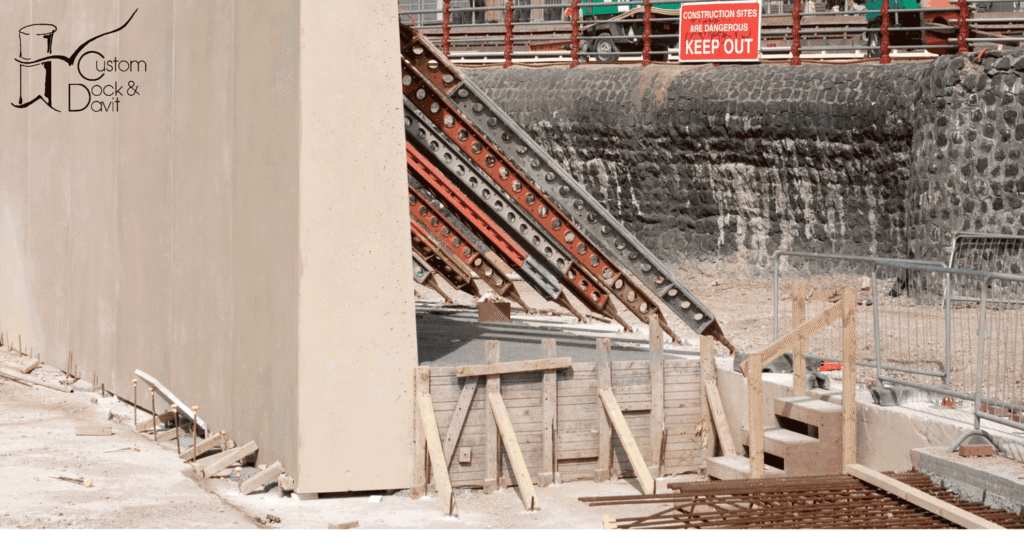
A seawall is a protective structure built along a shoreline to separate land from the water. Its main purpose is to help prevent soil erosion and protect waterfront property from the effects of water movement.
Seawalls are designed to resist pressure from the surrounding soil and water. Their construction depends on several factors, including shoreline conditions, soil characteristics, water depth, and structural requirements.
A properly constructed seawall can provide several benefits:
- Helps reduce shoreline erosion.
- Supports soil retention along the waterfront.
- Protects waterfront property from water movement.
- Creates a more stable shoreline boundary.
- Helps maintain the condition of waterfront land.
- Provides long-term shoreline protection when properly maintained.
However, seawall performance depends on appropriate design, construction quality, and regular inspections.
Why Is Seawall Construction Important in Southwest Florida?
Waterfront properties can experience changing water levels, wave action, rainfall, and other environmental conditions. Over time, these factors may affect the shoreline and surrounding soil.
Without suitable shoreline protection, erosion can gradually reduce the stability of waterfront land.
A properly planned seawall helps address these challenges.
1. Helps Prevent Soil Erosion
Soil erosion is a common concern for waterfront property owners.
Water movement can gradually remove soil from the shoreline. Over time, this may affect the land surrounding a waterfront property.
A seawall creates a protective barrier that helps retain soil and reduce erosion.
2. Protects Waterfront Property
Shoreline erosion can affect the usable land around a waterfront property.
As soil moves or washes away, the surrounding ground may become unstable.
A properly constructed seawall helps protect the shoreline and supports the long-term condition of the property.
3. Supports Shoreline Stability
A stable shoreline is important for maintaining waterfront property.
Seawalls help hold soil in place and provide structural support along the water’s edge.
Their effectiveness depends on proper construction, suitable materials, and appropriate drainage.
4. Helps Manage Water Movement
Water movement can create pressure against shoreline structures.
Seawalls are designed to resist these forces and help protect the land behind them.
However, the structure must be designed according to the property’s specific conditions and expected environmental loads.
5. Supports Long-Term Property Protection
A seawall is an important part of waterfront property protection.
Regular inspections and timely maintenance help preserve its structural condition.
Addressing early signs of deterioration can reduce the risk of more serious damage.
Common Types of Seawall Construction
Different seawall designs serve different shoreline conditions and structural requirements.
The appropriate construction method depends on soil conditions, water depth, expected water pressure, available space, and the property’s needs.
Understanding the main types of seawalls can help property owners make informed decisions.
1. Concrete Seawalls
Concrete seawalls are designed to provide a strong and durable shoreline barrier.
They are commonly considered for projects that require substantial structural support.
Important considerations include:
- Concrete quality.
- Reinforcement requirements.
- Foundation conditions.
- Structural design.
- Drainage arrangements.
- Environmental exposure.
Proper construction is essential to support long-term performance.
2. Vinyl Seawalls
Vinyl seawalls use specially designed vinyl sheet piling to create a protective shoreline barrier.
These systems are resistant to many forms of corrosion and do not experience the same rust-related deterioration as metal materials.
Their suitability depends on soil conditions, structural requirements, installation depth, and expected water forces.
3. Timber Seawalls
Timber seawalls use treated wood materials to create a shoreline barrier.
Their construction requires careful consideration of material quality, structural support, and exposure to water.
Regular inspections are important because prolonged moisture exposure can affect timber components over time.
4. Steel Seawalls
Steel seawalls use steel sheet piling to provide structural support along the shoreline.
They can be suitable for projects with specific structural requirements.
However, steel components require attention to corrosion protection and regular inspections.
The appropriate material should be selected based on the property’s conditions and the project’s engineering requirements.
Important Factors to Consider Before Seawall Construction
Building a seawall requires more than selecting a construction material. The structure must be designed to handle the conditions of the shoreline.
Careful planning helps reduce construction problems and supports long-term performance.
1. Soil Conditions
Soil characteristics play an important role in seawall construction.
Different soil types have different levels of strength, stability, and drainage capacity.
Before construction, the soil should be evaluated to understand:
- Soil composition.
- Ground stability.
- Drainage conditions.
- Potential soil movement.
- Required structural support.
A proper assessment helps determine the appropriate construction approach.
2. Water Depth and Shoreline Conditions
Water depth and shoreline characteristics influence seawall design.
The structure must be suitable for the surrounding water conditions and expected forces.
Factors such as water movement, wave action, and changing water levels should be considered during planning.
3. Material Selection
Choosing suitable materials is essential for seawall durability.
Different materials offer different structural properties and maintenance requirements.
The selection should consider:
- Expected environmental exposure.
- Structural strength.
- Resistance to deterioration.
- Soil conditions.
- Construction requirements.
- Long-term maintenance needs.
Selecting suitable materials helps support the intended performance of the seawall.
4. Structural Design
A seawall must be designed to resist pressure from both the soil and the water.
The design should account for the height of the structure, soil conditions, water levels, and expected loading.
Proper engineering helps determine the required dimensions, reinforcement, and foundation support.
5. Drainage Requirements
Drainage is an important part of seawall construction.
Water can accumulate behind the structure and create additional pressure.
Without suitable drainage, this pressure may contribute to cracks, movement, or structural damage.
A properly planned drainage system helps manage water behind the seawall.
6. Permits and Environmental Requirements
Seawall construction may require permits and regulatory approvals.
Requirements can depend on the property’s location, shoreline conditions, project design, and environmental considerations.
Property owners should review applicable requirements before beginning construction.
Professional guidance can help identify the necessary approvals and documentation.
Signs Your Seawall Needs Repair or Replacement
Seawalls experience continuous exposure to water, soil pressure, and environmental conditions.
Over time, these factors may affect their structural condition.
Recognizing early warning signs can help property owners address problems before they become more serious.
1. Visible Cracks
Cracks along a seawall may indicate deterioration or structural movement.
Small surface cracks should be monitored. However, widening cracks or significant damage may require professional attention.
A proper inspection can help determine the cause and extent of the problem.
2. Soil Erosion Behind the Seawall
Soil loss behind a seawall can indicate drainage problems or gaps in the structure.
You may notice:
- Small holes near the wall.
- Areas of sinking soil.
- Voids behind the structure.
- Uneven ground near the shoreline.
These conditions should be evaluated because continued soil loss may affect structural stability.
3. Seawall Leaning or Movement
A seawall should remain stable under normal operating conditions.
If the structure begins leaning, shifting, or separating, it may indicate excessive pressure or foundation problems.
Professional evaluation is important to identify the cause.
4. Water Seepage
Water passing through cracks or joints may indicate deterioration.
Seepage can also contribute to soil movement behind the wall.
Drainage and structural components should be inspected to determine whether corrective work is needed.
5. Corrosion or Material Deterioration
Metal components may develop corrosion over time.
Timber components can also experience deterioration after prolonged exposure to moisture.
Regular inspections help identify material problems before they affect the overall structure.
6. Damaged Caps and Connections
The top section and connections of a seawall are important parts of its structure.
Cracks, loose sections, and damaged connections may indicate wear or movement.
These components should be inspected as part of regular seawall maintenance.
Seawall Maintenance Tips for Long-Term Protection
Regular maintenance helps preserve seawall performance and identify problems early.
Although construction quality is important, ongoing inspections are necessary because seawalls remain exposed to environmental forces.
Here are some practical maintenance recommendations.
1. Inspect the Seawall Regularly
Check the visible surface of the seawall for cracks, movement, corrosion, and other signs of deterioration.
Pay attention to areas where the wall connects with surrounding structures.
Keep a record of visible changes to help identify developing problems.
2. Monitor Soil Behind the Structure
Look for signs of soil loss, sinking ground, and unusual depressions.
These conditions may indicate drainage problems or soil movement.
Addressing these concerns early can help reduce further deterioration.
3. Check Drainage Components
Drainage systems help manage water pressure behind the seawall.
Inspect visible drainage openings and check for obstructions.
Blocked drainage components may prevent water from escaping properly and increase pressure against the structure.
4. Watch for Structural Movement
Observe the seawall for leaning, separation, or changes in alignment.
Any noticeable movement should receive professional attention.
Avoid assuming that small changes are harmless, especially when they continue over time.
5. Protect Exposed Materials
Different seawall materials require different maintenance practices.
Concrete may need attention when cracks or surface deterioration appear. Metal components require corrosion monitoring, while timber structures need inspections for moisture-related damage.
Follow material-specific maintenance recommendations.
6. Schedule Professional Inspections
Some seawall problems are difficult to identify through visual checks alone.
Professional inspections help evaluate structural condition, drainage performance, material deterioration, and possible soil movement.
Regular professional attention can help property owners plan maintenance before problems become more serious.
When Should You Consider Seawall Replacement?
Not every seawall problem requires complete replacement. Some issues can be addressed through suitable repairs.
However, severely deteriorated or structurally unstable seawalls may require a replacement project.
Consider professional evaluation when:
- The seawall has extensive structural damage.
- Significant sections show movement or leaning.
- Soil erosion continues behind the structure.
- Major components have deteriorated.
- Repeated repairs have not resolved the problem.
- The existing structure no longer provides adequate shoreline protection.
A professional assessment can help determine whether repair or replacement is the appropriate solution.
How to Prepare for a Seawall Construction Project
Proper preparation helps make a seawall project more organized and reduces the possibility of unexpected problems.
Before beginning construction, property owners should understand the property’s conditions and project requirements.
Consider these steps:
Evaluate the existing shoreline: Identify visible erosion, soil movement, and structural concerns.
Understand the property conditions: Review soil characteristics, water depth, and surrounding structures.
Determine material requirements: Select suitable construction materials based on the property’s needs.
Review drainage requirements: Make sure the design considers water management behind the seawall.
Check permit requirements: Confirm the approvals and documentation needed before construction.
Plan for long-term maintenance: Consider future inspections and maintenance requirements during the initial planning stage.
Proper preparation helps create a seawall that meets the property’s structural and shoreline protection needs.
Why Choose Custom Dock & Davit for Seawall Construction Services?
Choosing an experienced marine construction company is important for a seawall project.
Seawall construction requires an understanding of soil conditions, water pressure, structural support, material selection, and drainage requirements.
Custom Dock & Davit has been serving waterfront property owners since 1980. The company understands the importance of careful planning and proper construction for waterfront structures.
Custom Dock & Davit provides professional assistance with seawall projects, including:
- Seawall Construction: Planning and building seawalls based on property conditions and structural requirements.
- Seawall Replacement: Evaluating existing structures and helping determine suitable replacement solutions.
- Seawall Repairs: Addressing visible damage and structural concerns.
- Seawall Inspections: Evaluating the condition of important structural and drainage components.
Every seawall project has different requirements. The property’s shoreline, soil conditions, water movement, and structural needs should be considered before construction begins.
Custom Dock & Davit focuses on providing practical construction solutions that support long-term shoreline protection.
Frequently Asked Questions About Seawall Construction
1. What is the main purpose of a seawall?
A seawall helps protect waterfront property from soil erosion and shoreline movement.
It acts as a barrier between the land and water, helping retain soil and support shoreline stability.
2. How long does a seawall last?
A seawall’s lifespan depends on its construction materials, installation quality, environmental exposure, and maintenance.
Regular inspections and timely repairs can help preserve its structural condition.
3. What materials are used for seawall construction?
Common seawall materials include concrete, vinyl, timber, and steel.
The appropriate material depends on soil conditions, water exposure, structural requirements, and the property’s needs.
4. What are the common signs of seawall damage?
Common warning signs include cracks, soil erosion, water seepage, leaning, corrosion, and damaged connections.
These problems should be professionally evaluated to determine their cause and severity.
5. Does a seawall require regular maintenance?
Yes. Seawalls need regular inspections to identify cracks, drainage problems, soil movement, and material deterioration.
Timely maintenance helps prevent minor issues from developing into more serious structural concerns.
6. Can a damaged seawall be repaired?
Many seawall problems can be addressed through appropriate repairs.
However, the correct solution depends on the extent of the damage and the overall structural condition.
A professional inspection can help determine whether repairs are suitable.
7. When should a seawall be replaced?
Replacement may be necessary when a seawall has extensive structural damage, significant movement, or severe material deterioration.
A professional assessment can help determine the most appropriate approach.
8. Are permits required for seawall construction?
Seawall construction may require permits and regulatory approvals.
Requirements depend on the property’s conditions and applicable environmental and construction regulations. Property owners should confirm these requirements before starting work.
Contact Custom Dock & Davit for Seawall Construction Services
A properly constructed seawall is an important part of protecting waterfront property. It helps reduce soil erosion, supports shoreline stability, and provides a protective barrier against water movement.
However, long-term performance depends on suitable materials, proper construction, effective drainage, and regular maintenance.
Custom Dock & Davit provides professional seawall construction services in Southwest Florida. With marine construction experience dating back to 1980, the company understands the importance of building reliable shoreline protection structures.
Whether you are planning a new seawall or evaluating an existing structure, professional guidance can help you understand the requirements of your project.